


About the Solar Observations
History
Systematic solar observations in Turkey began in 1945 at Istanbul University Observatory. At first they consisted only of marking the positions of sunspot groups on a 10 cm projection disc; they were later continued with more detailed photosphere drawings made on a 25 cm projected image, and narrow-band H-alpha chromosphere observations with a Lyot filter were added. The programme continues to this day.
The photosphere and chromosphere of the Sun are observed at our Observatory on every day the weather permits, with two refractors of 13 cm × 200 cm and 12 cm × 232 cm aperture and focal length mounted on the tube of a 30 cm astrograph, and are recorded by drawing and photography. The oldest digitised drawing in the archive is dated 04.12.1950.
Photosphere Observations
Drawing and following the photosphere, the visible surface layer of the Sun, is one of the regular observational activities of our Observatory.

The drawings are reduced on a computer with the Rasat Değerlendirme Sistemi (RDS, “observation evaluation system”) developed in our department. It computes the solar parameters of the observation (P, B0 and L0) and the heliographic coordinates and extents of the sunspot groups; the results are stored together with the group classification and the observation and observer details.

The observation details and results are published on these pages every day: monthly report, sunspot groups, drawing archive.
Quantities used
- R = 10g + f
- Wolf relative number (g: number of groups, f: number of spots)
- P, B0, L0
- Position angle of the solar rotation axis, heliographic latitude of the disc centre and Carrington longitude
- Group class
- McIntosh classification (e.g. DAI, HSX)
- B, L, ΔL
- Heliographic latitude and longitude of the group and its distance from the central meridian (E/W)
- Seeing
- 1 (worst) – 5 (best)
Chromosphere Observations
Following and photographing the chromosphere of the Sun is another of our regular observational activities. Chromosphere observations began in 1956 with the purchase of an Hα Lyot filter and were carried out with classical photography until recently; today they continue with digital imaging using a modern electronic Hα filter and an astronomical CCD camera.

On every day the weather permits, the chromosphere is observed and photographed in a narrow band centred on the hydrogen-alpha line. This allows us to study flares, filaments and prominences, each an important indicator of solar activity. The system is mounted on the 12 cm aperture, 232 cm focal length (f/19) refractor on top of the D = 30 cm, f = 150 cm astrograph. All digital H-alpha images and Coronado films are in the H-α Archive; for today’s solar activity (flares, CMEs, geomagnetic storms) see the Space Weather page.
Chromosphere images 2011–2015 (“latest record” images from the former site)
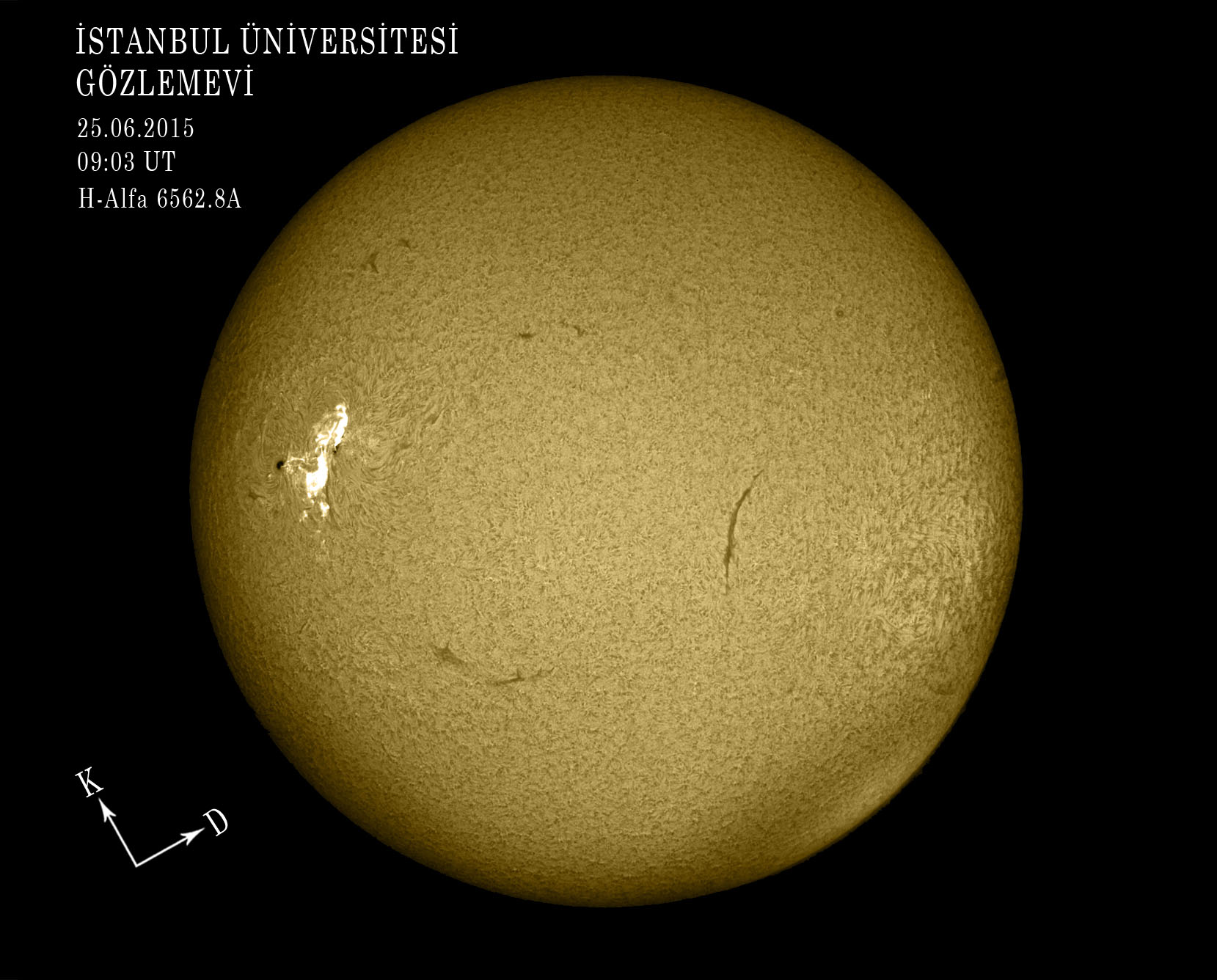 last record
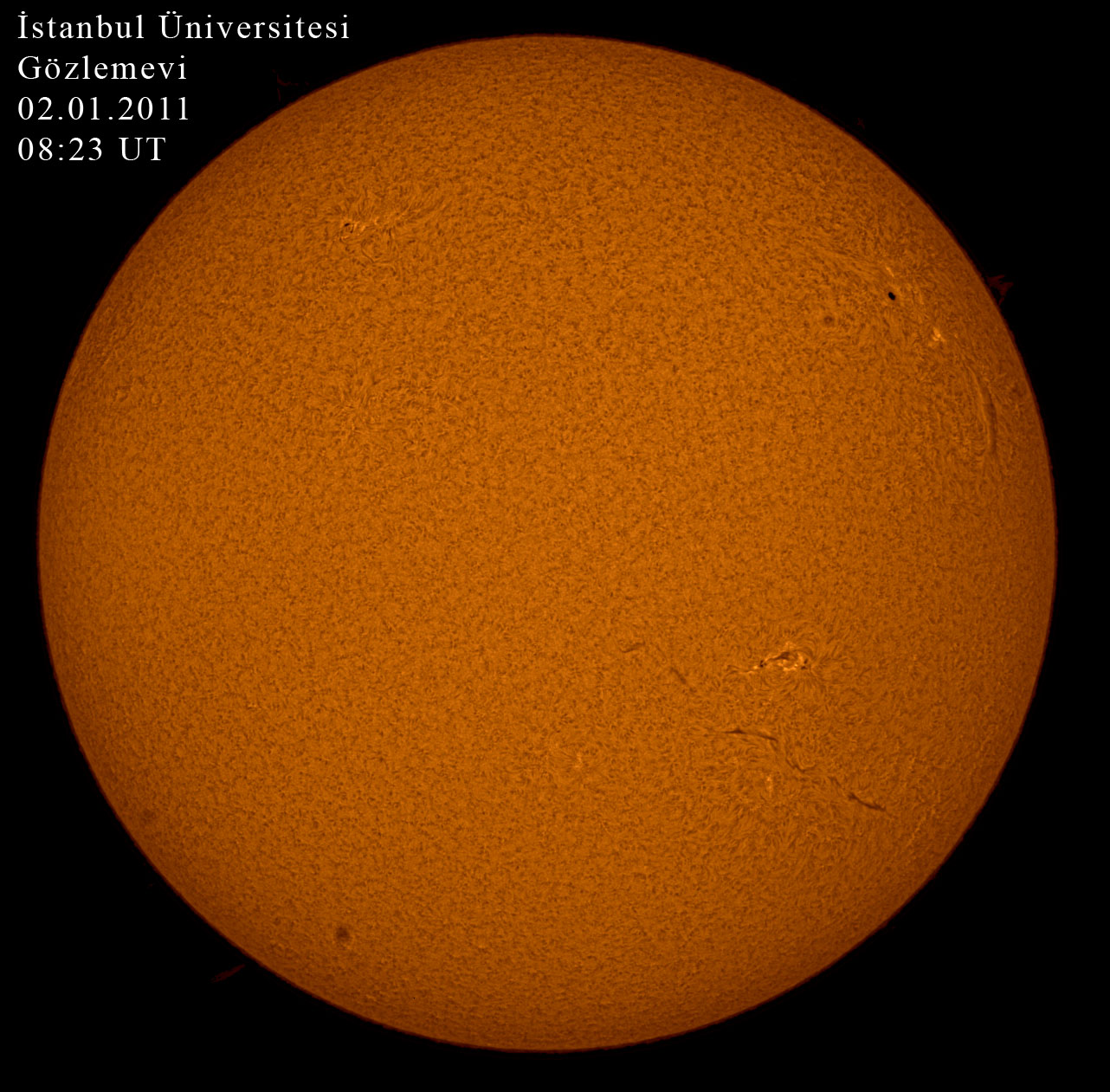 02.01.2011
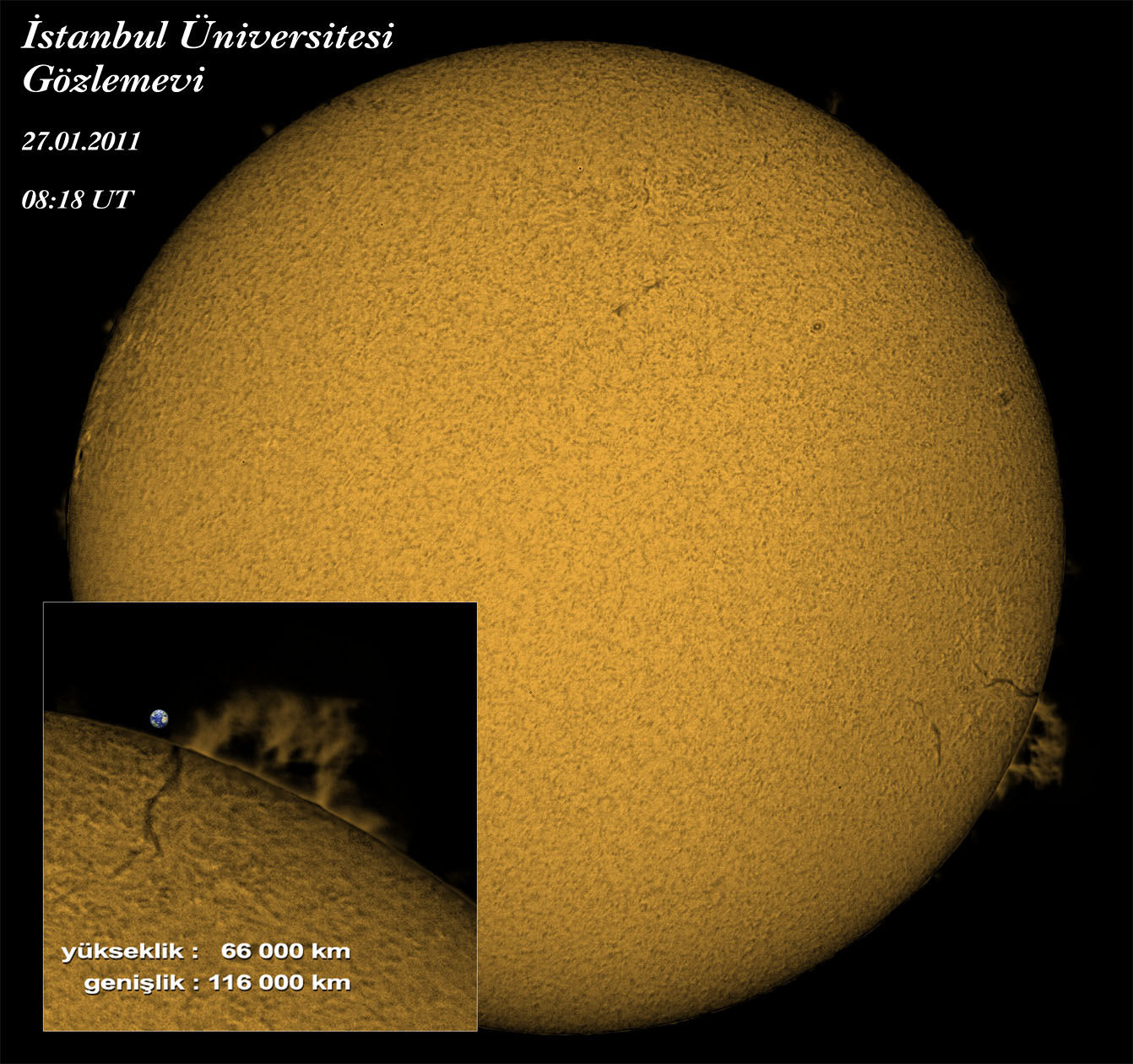 27.03.2011
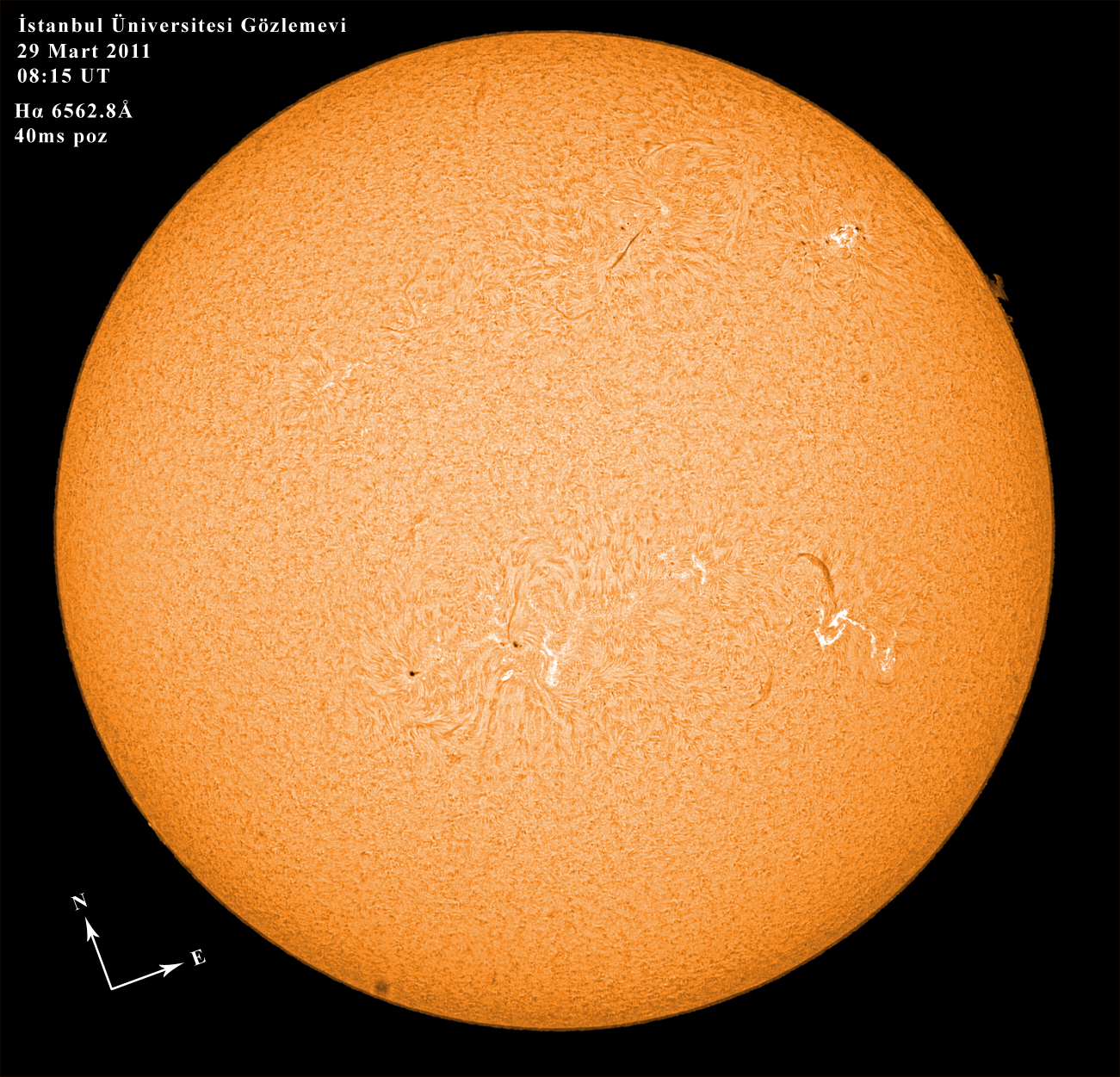 29.03.2011
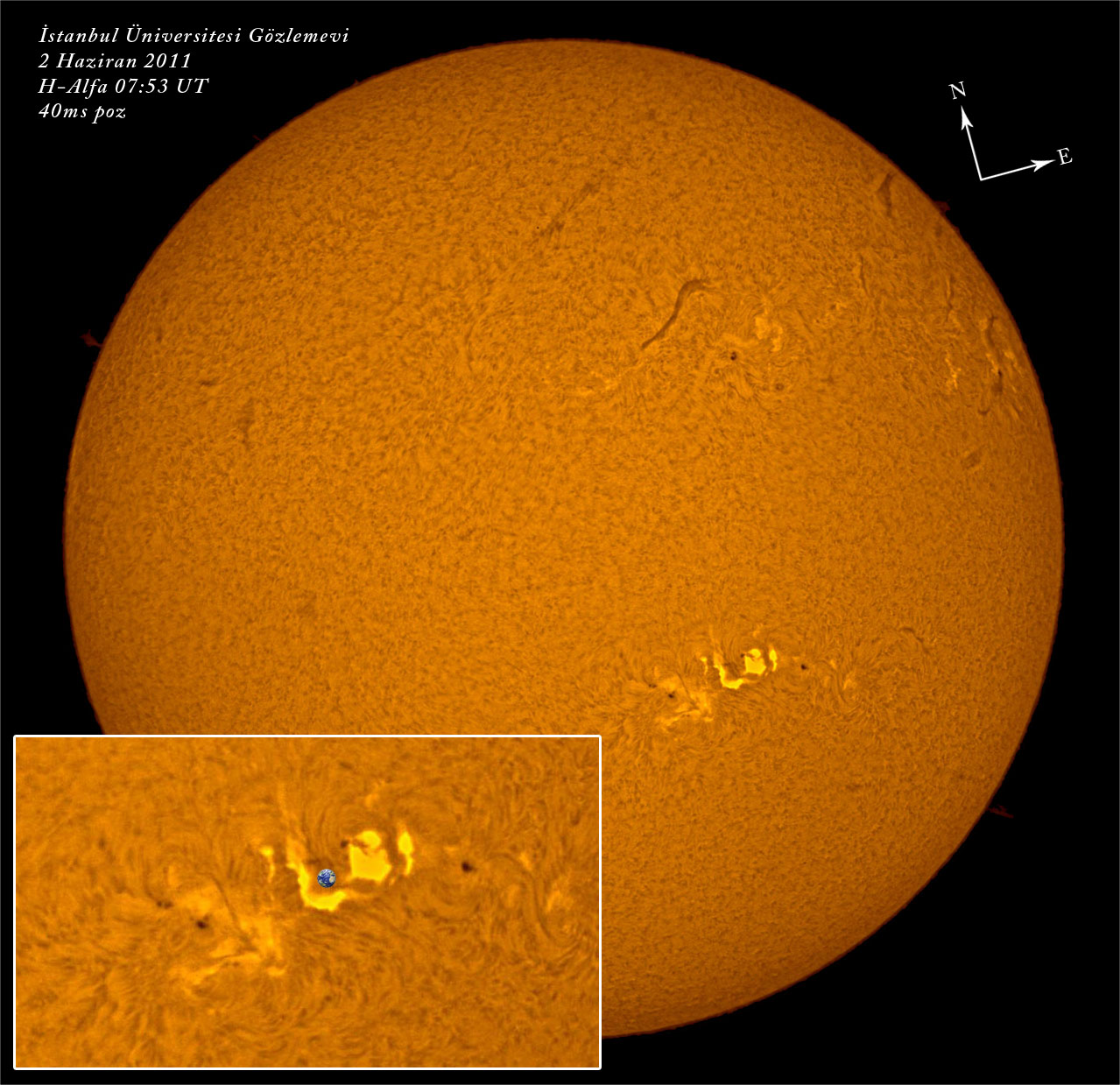 02.06.2011
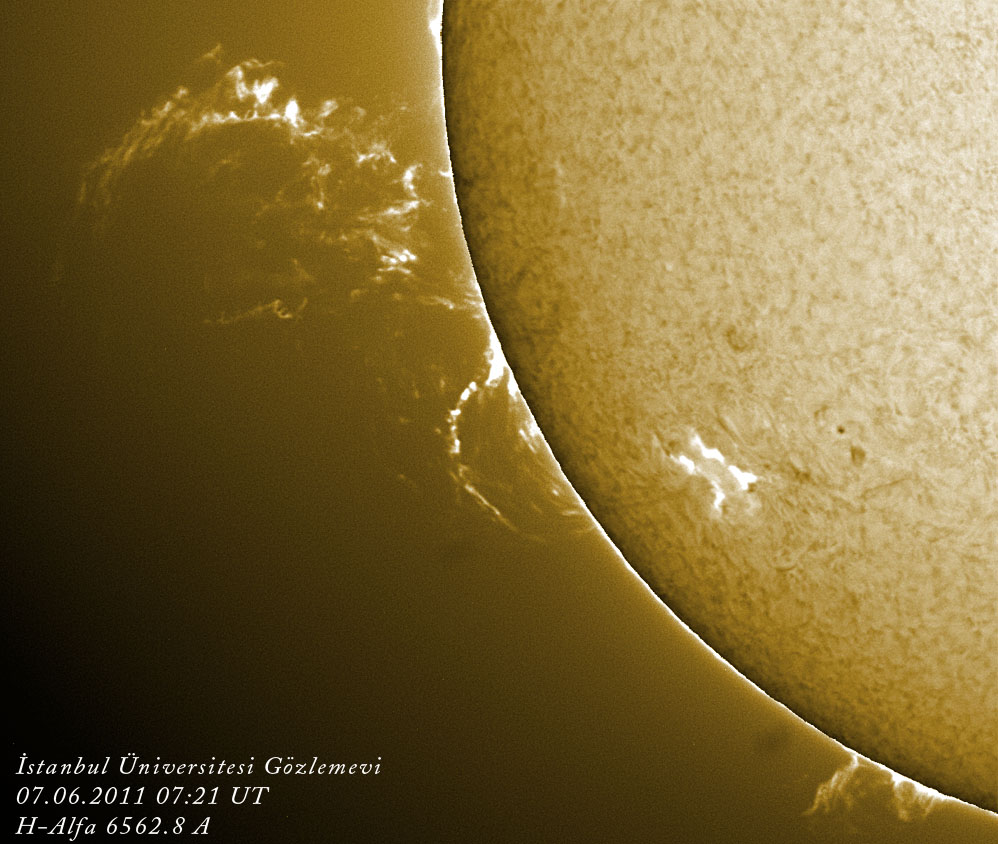 07.06.2011
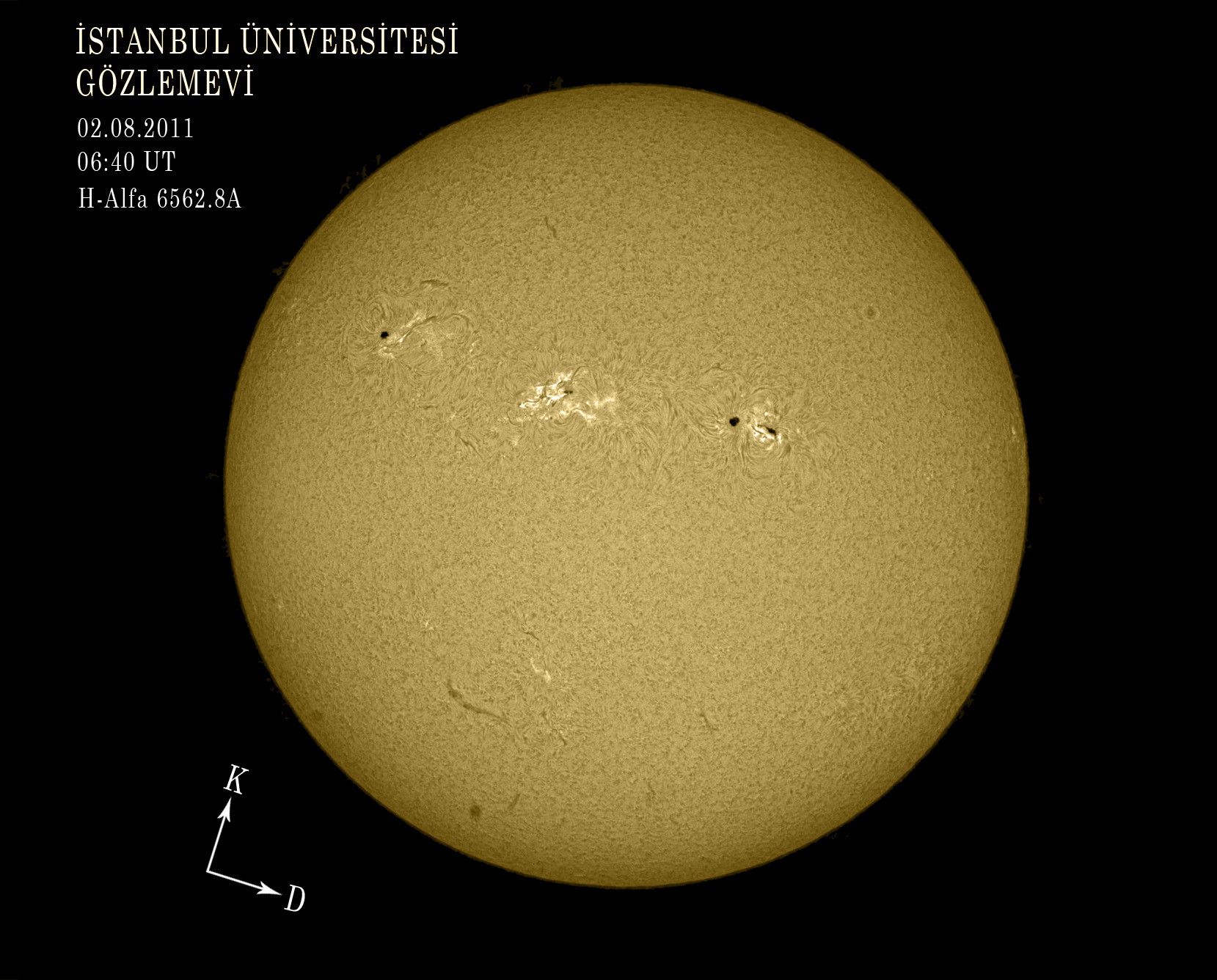 02.08.2011
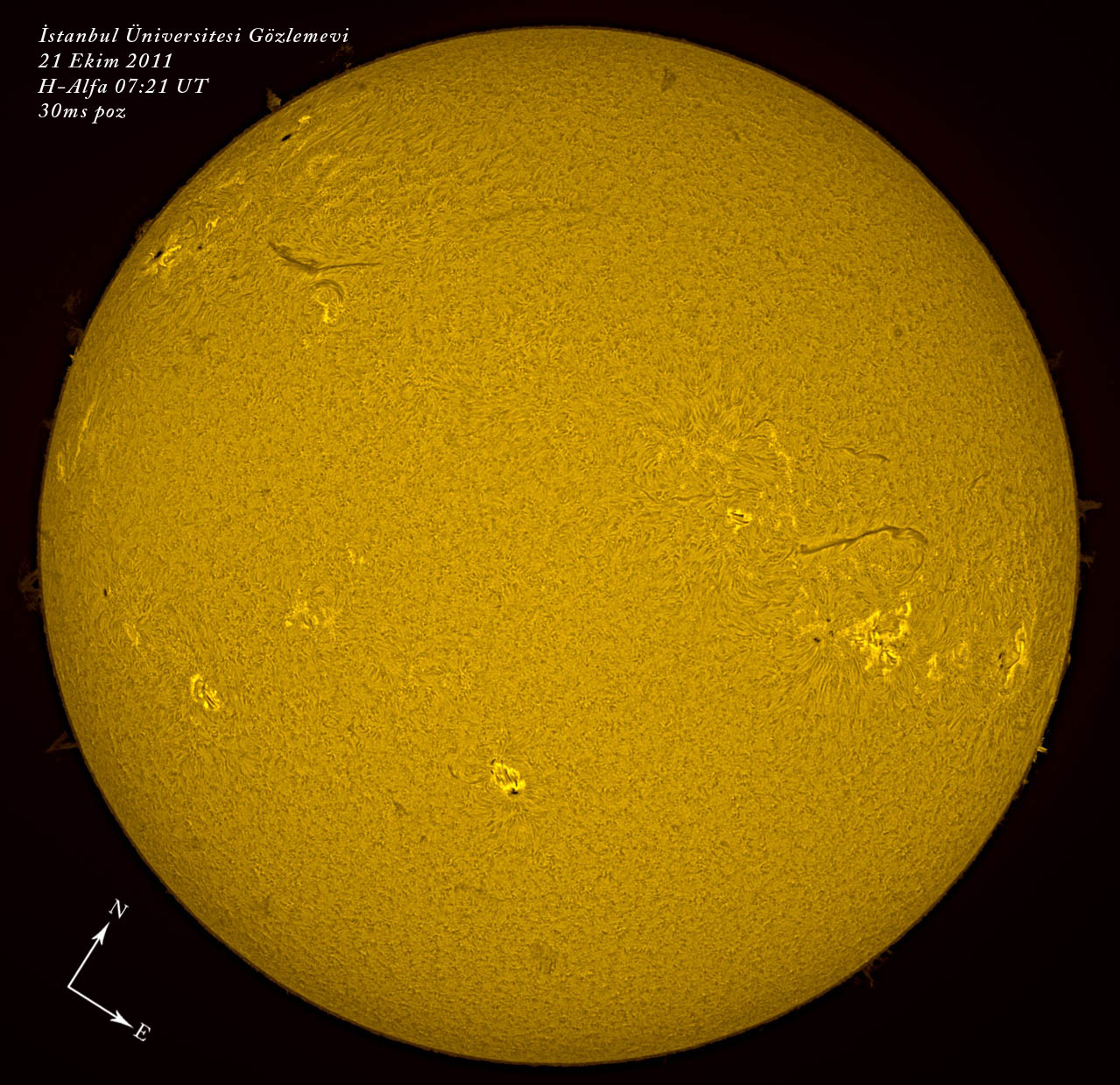 21.10.2011
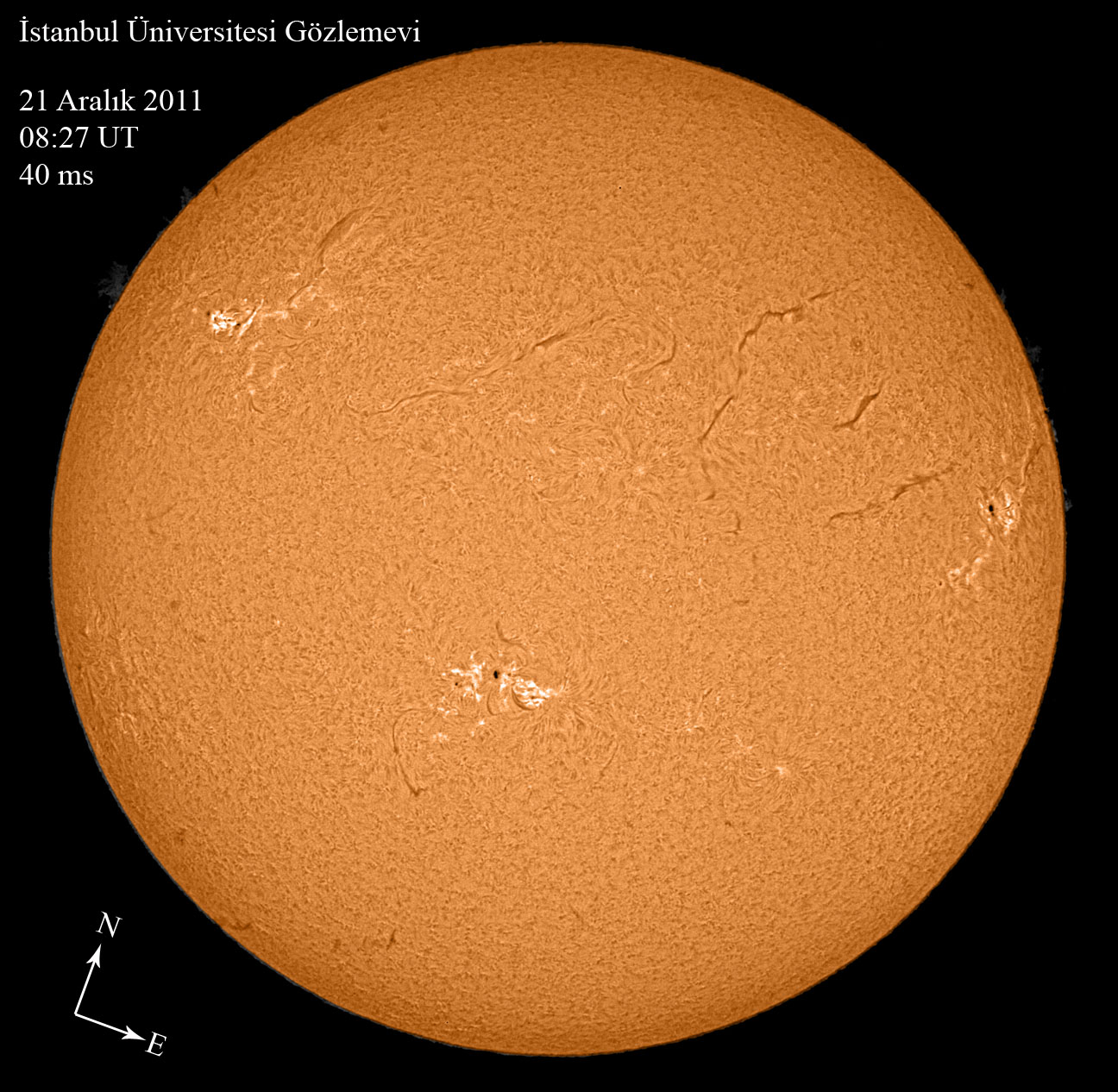 21.12.2011
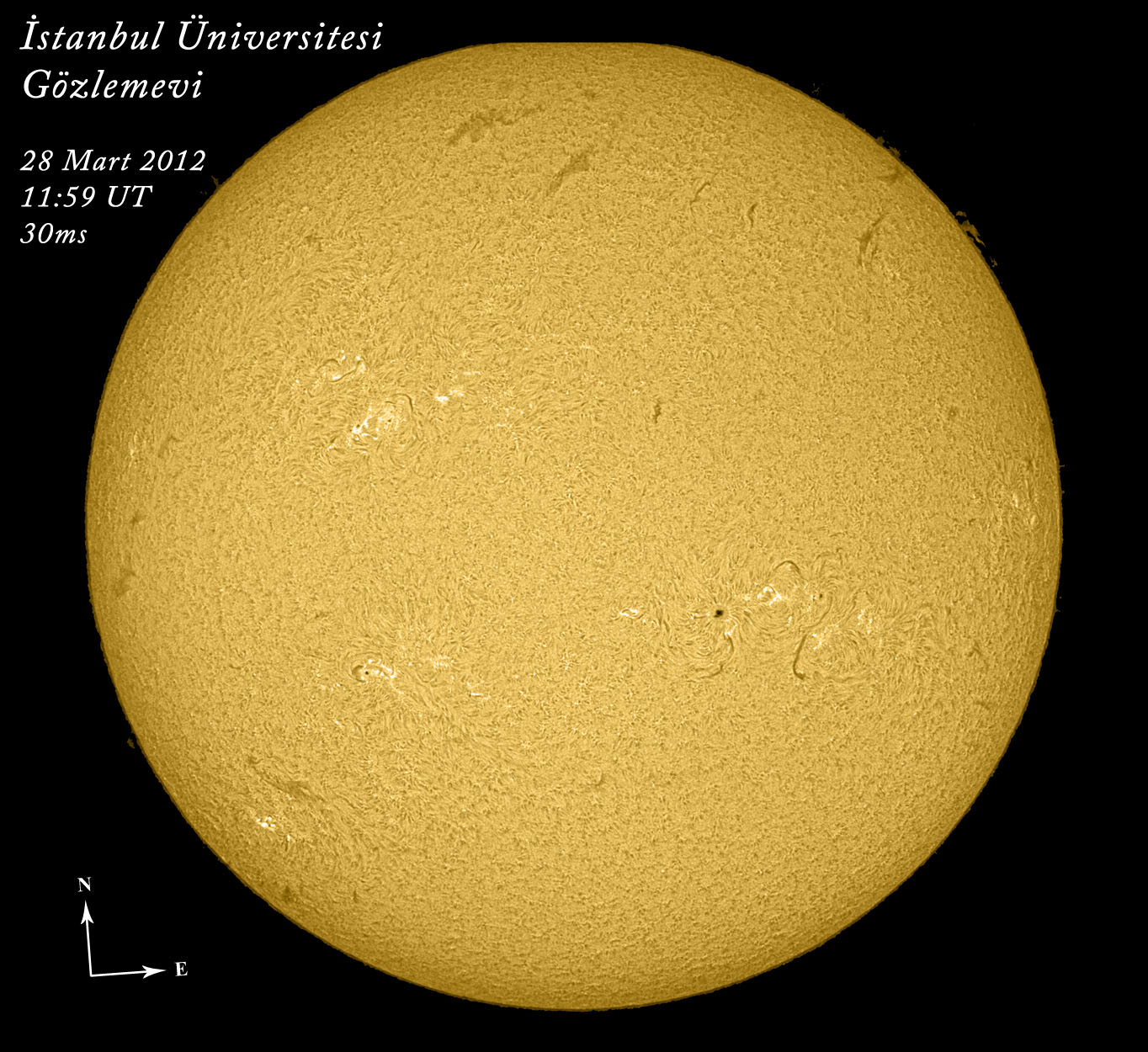 28.03.2012
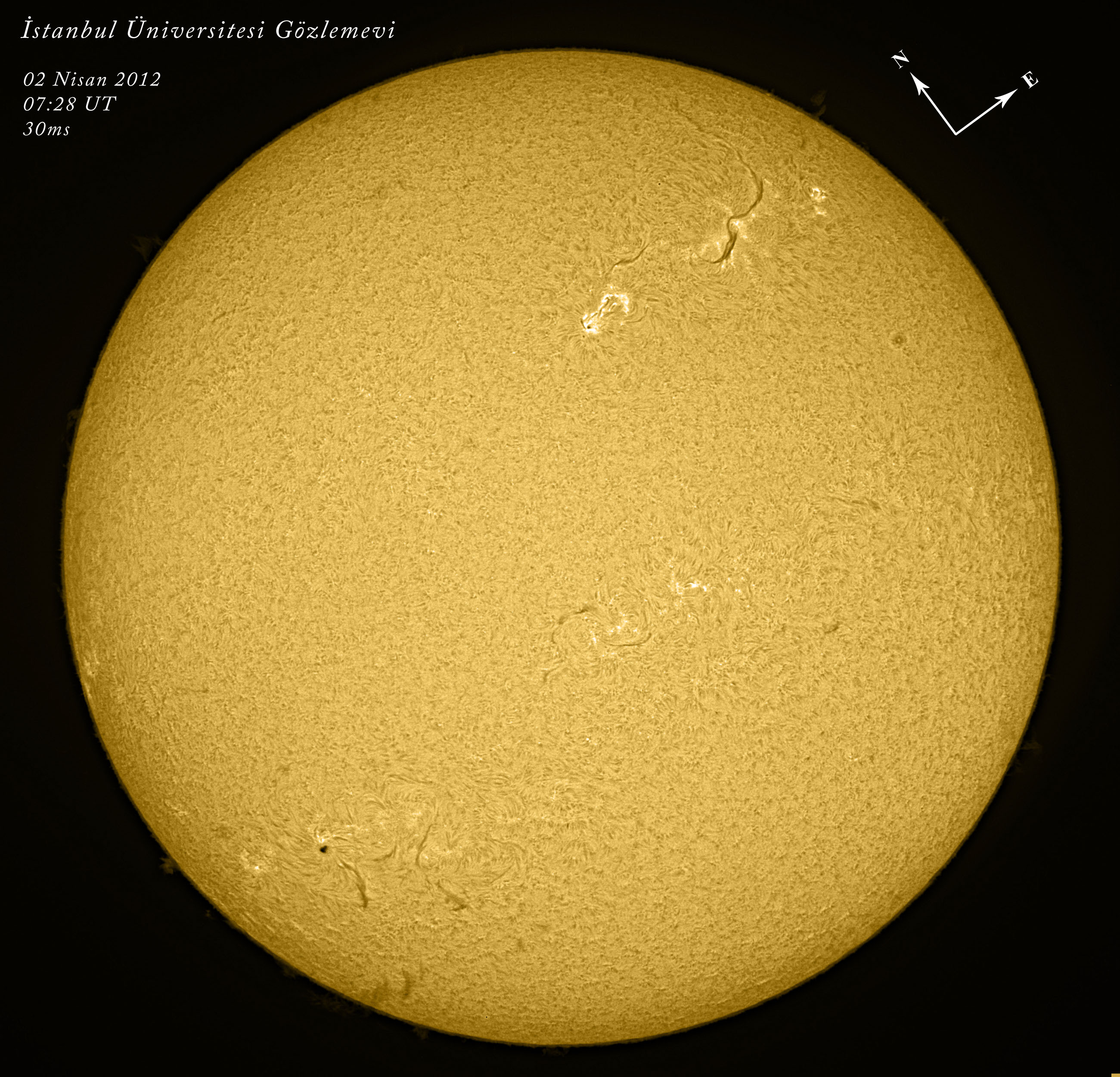 02.04.2012
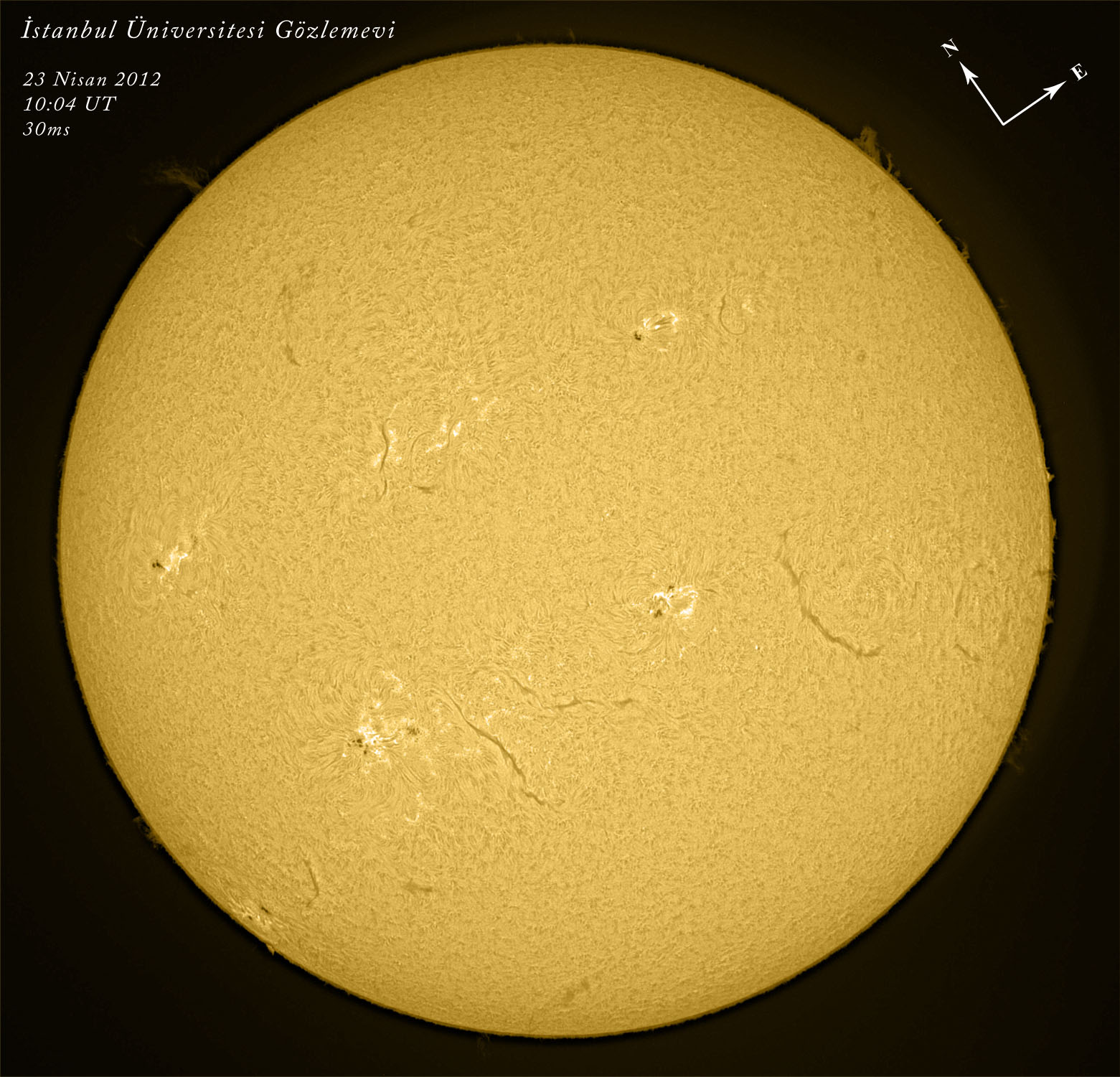 23.04.2012
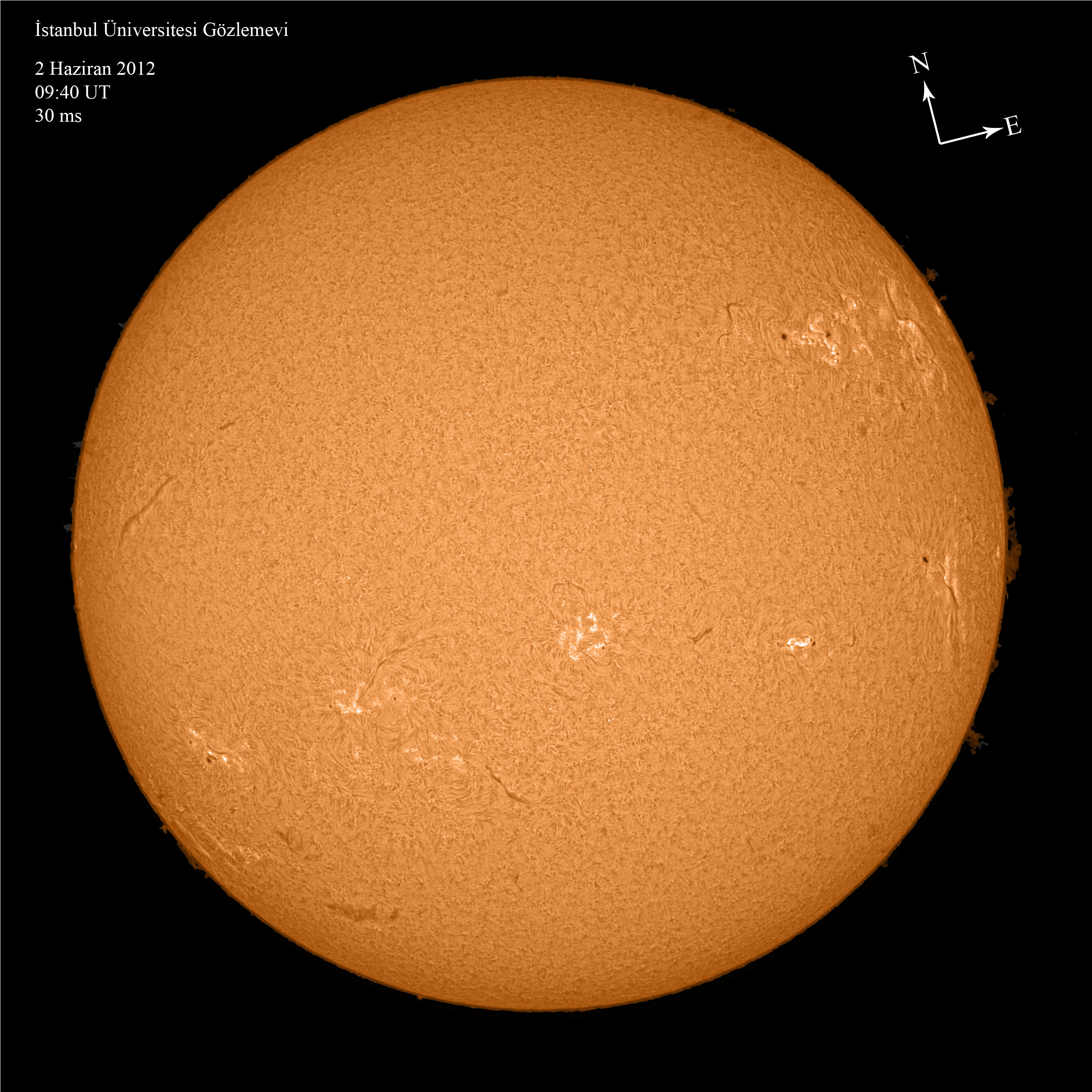 02.06.2012
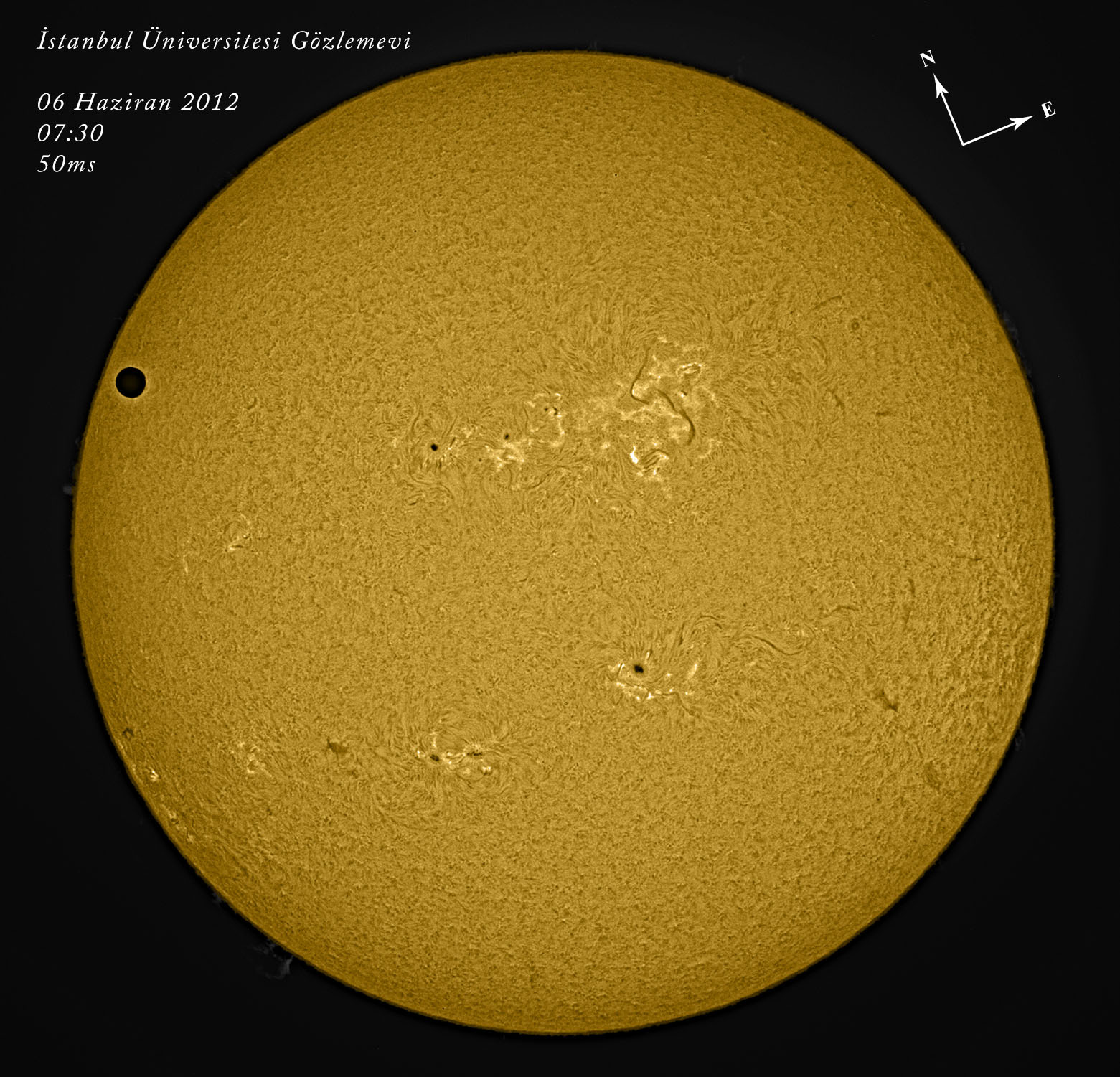 07.06.2012
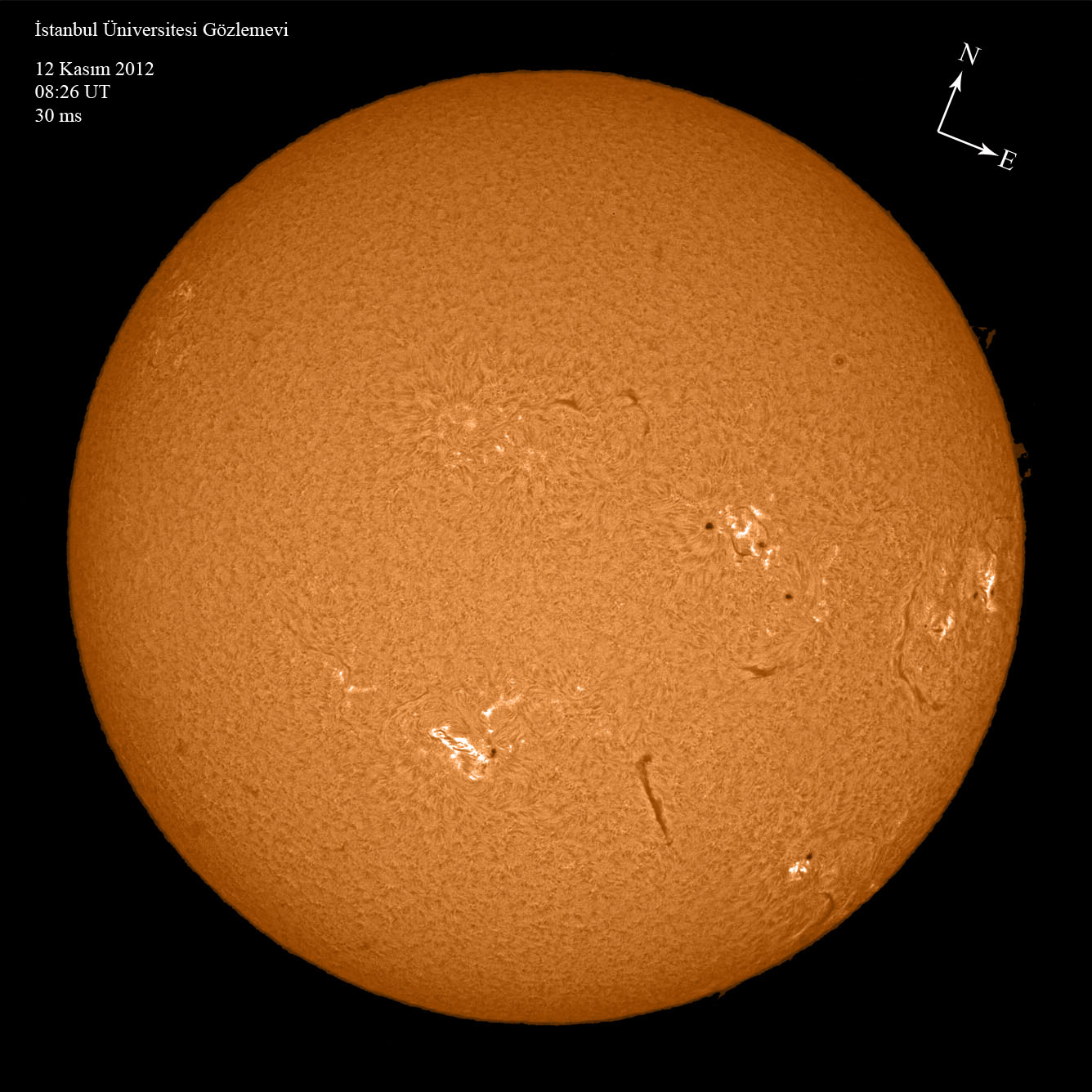 12.11.2012
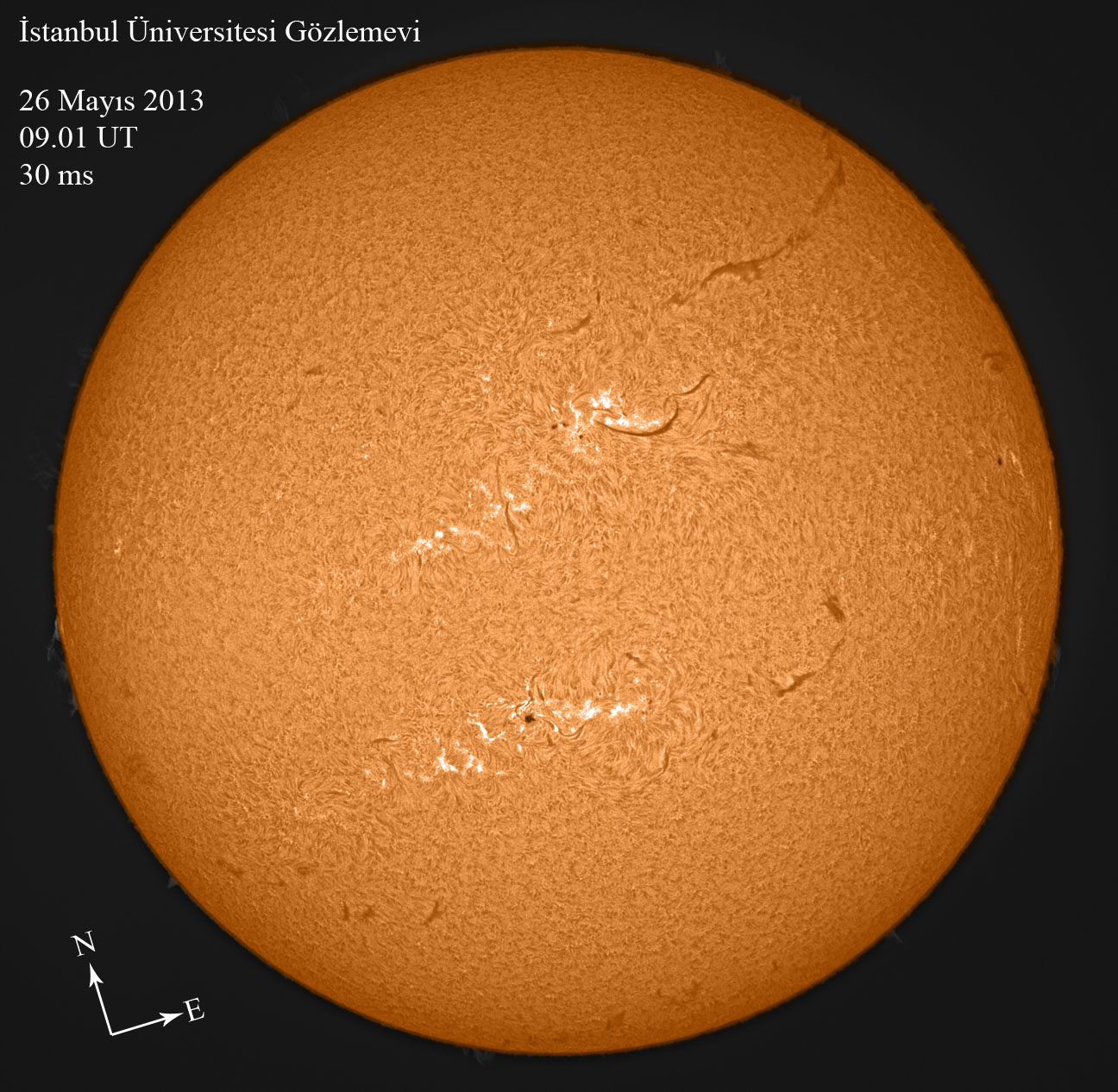 26.05.2013
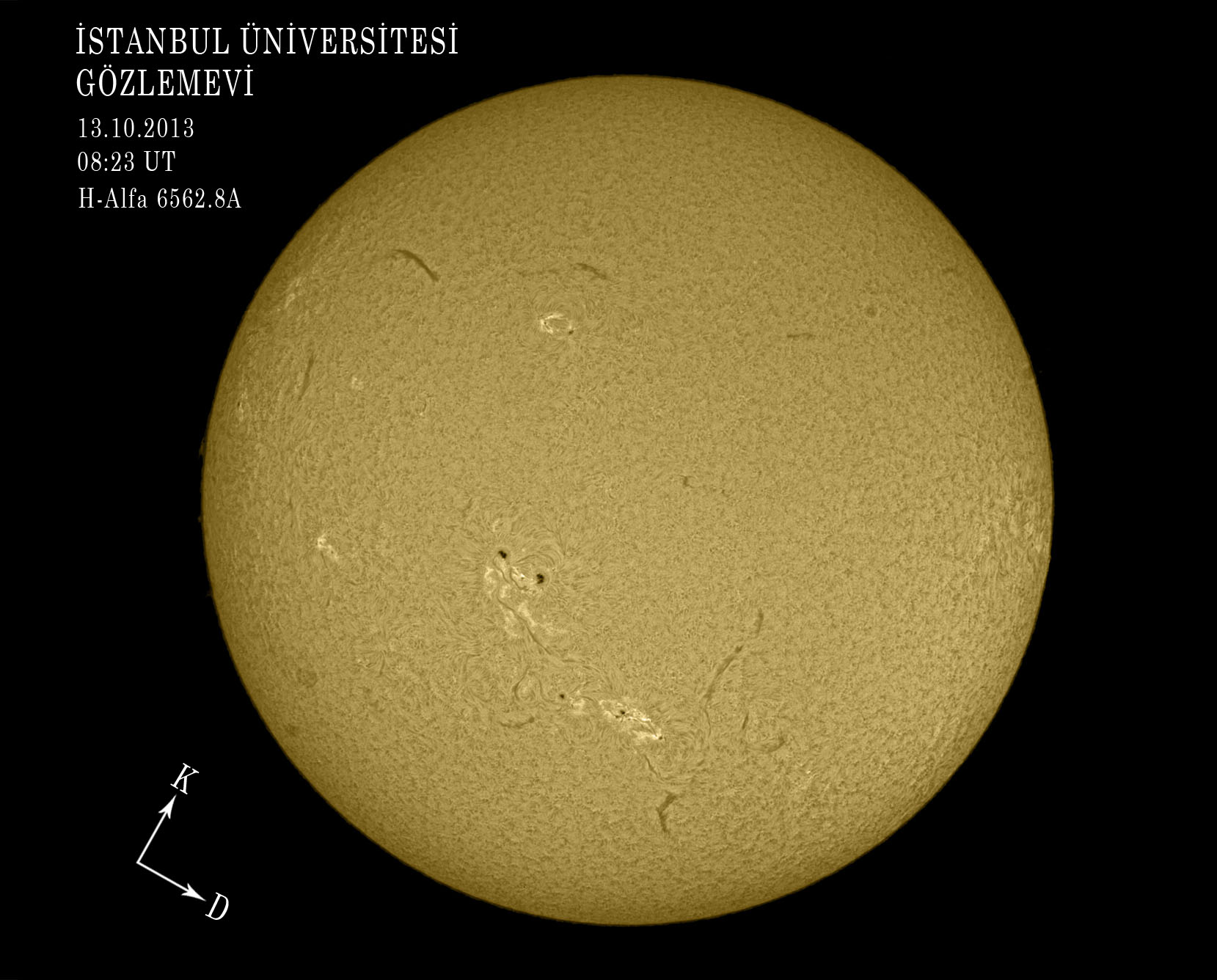 13.10.2013
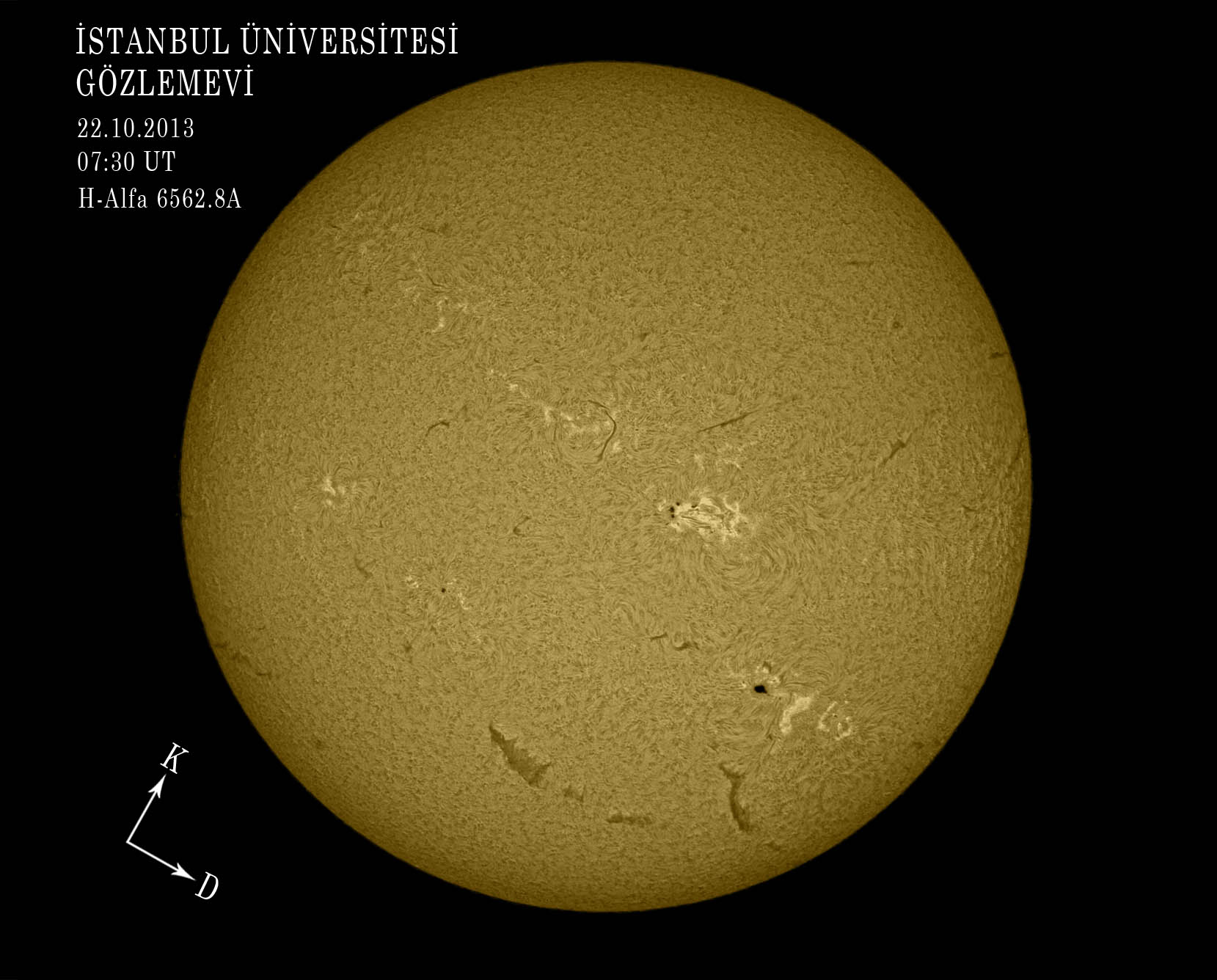 22.10.2013
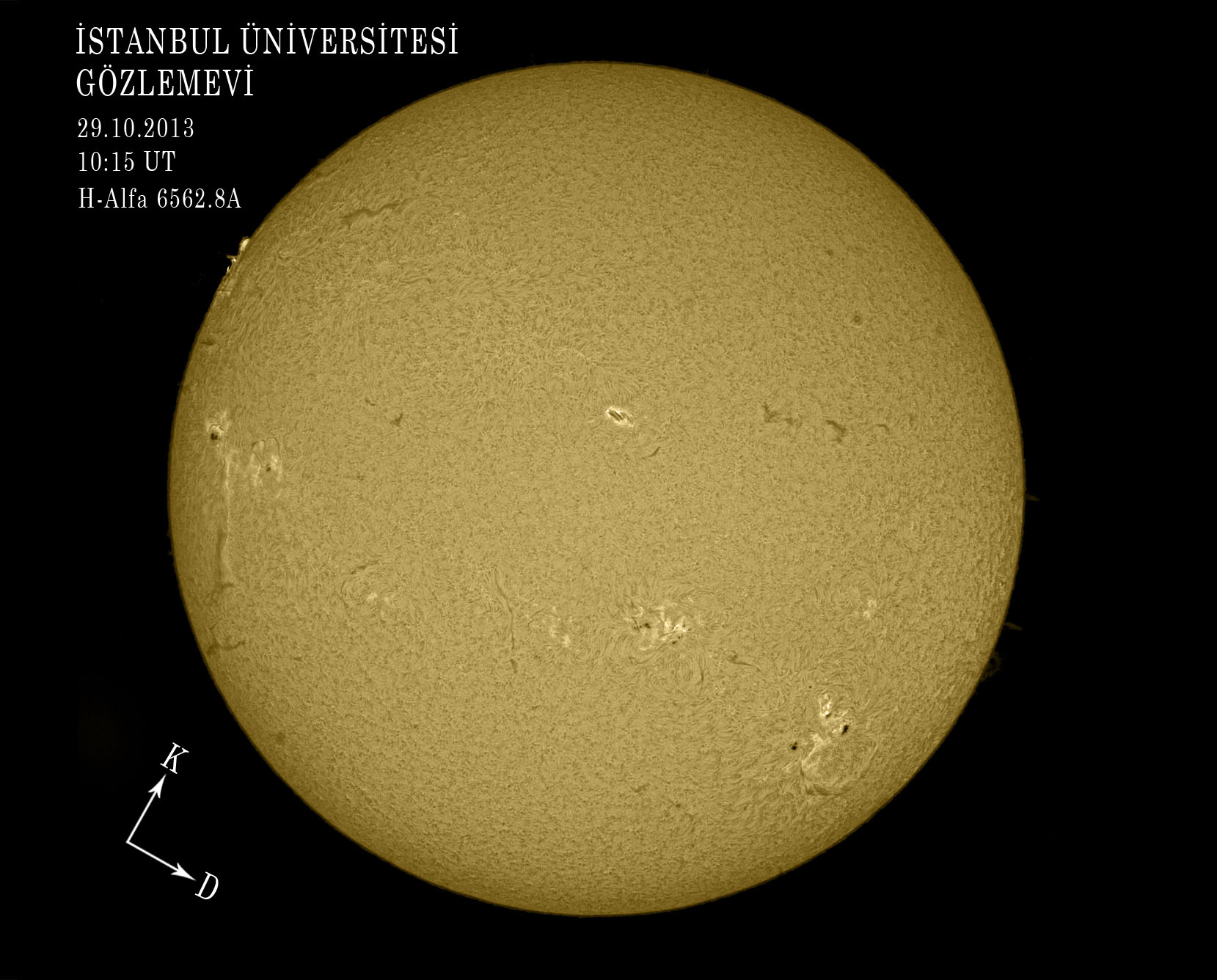 29.10.2013
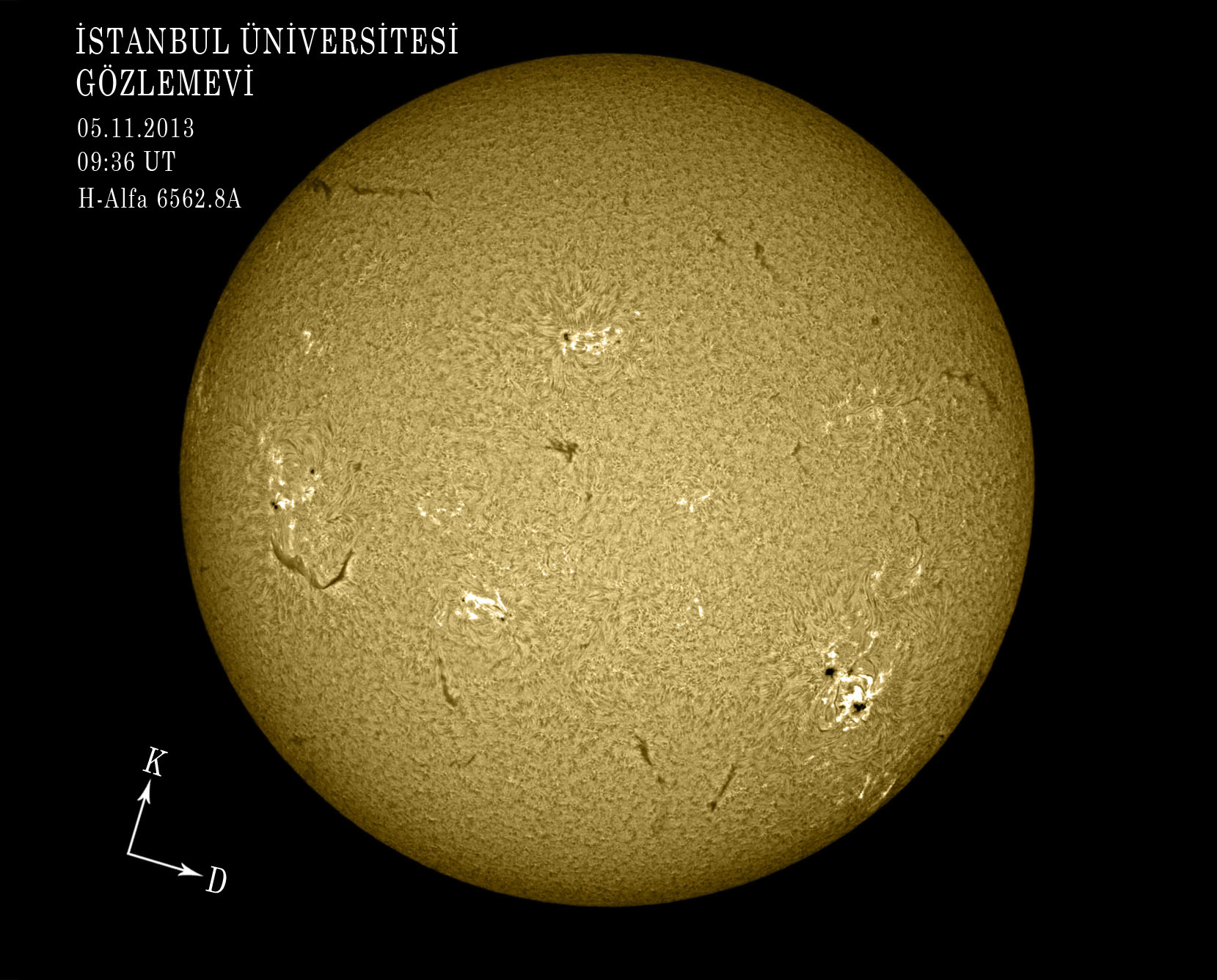 05.11.2013
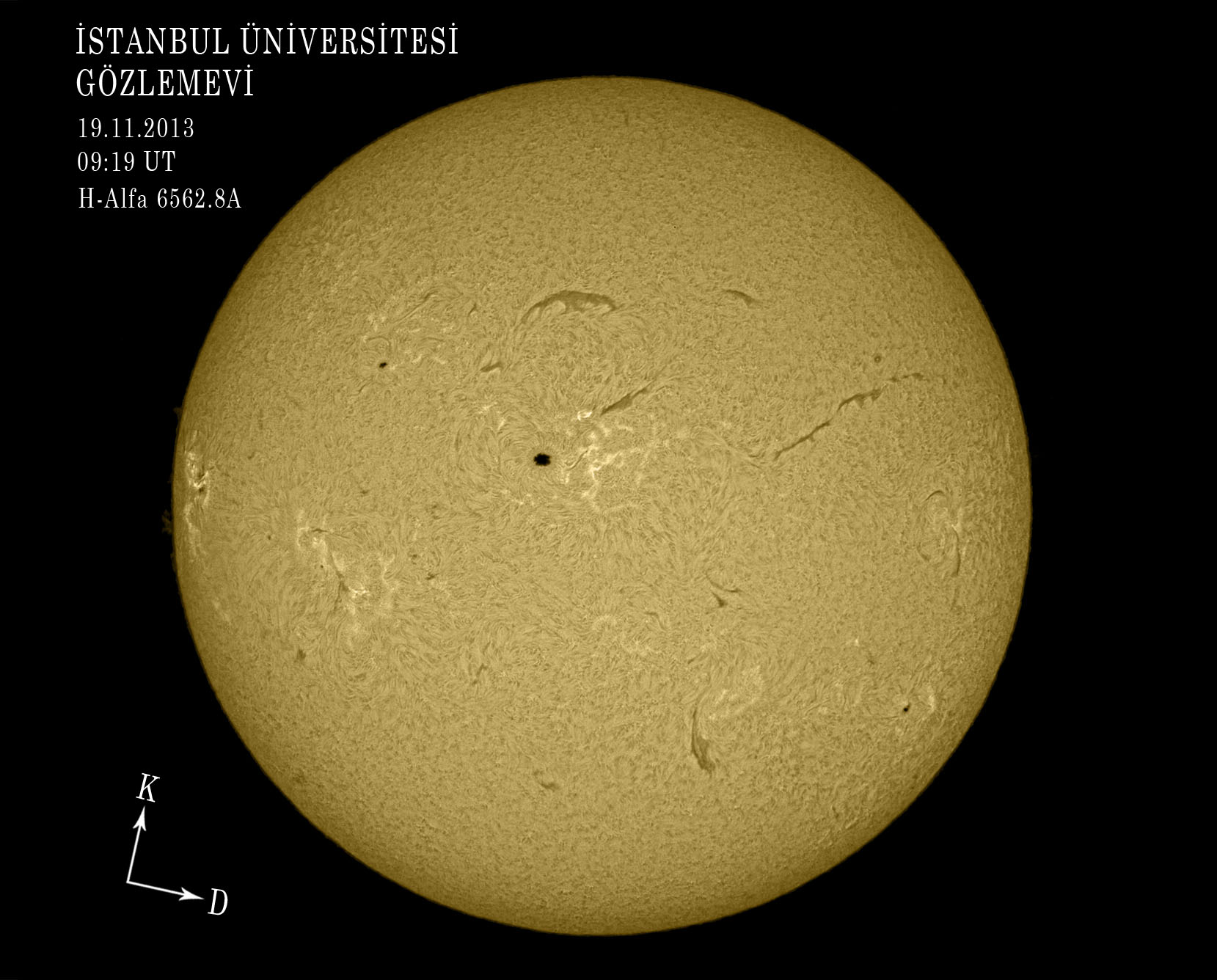 19.11.2013
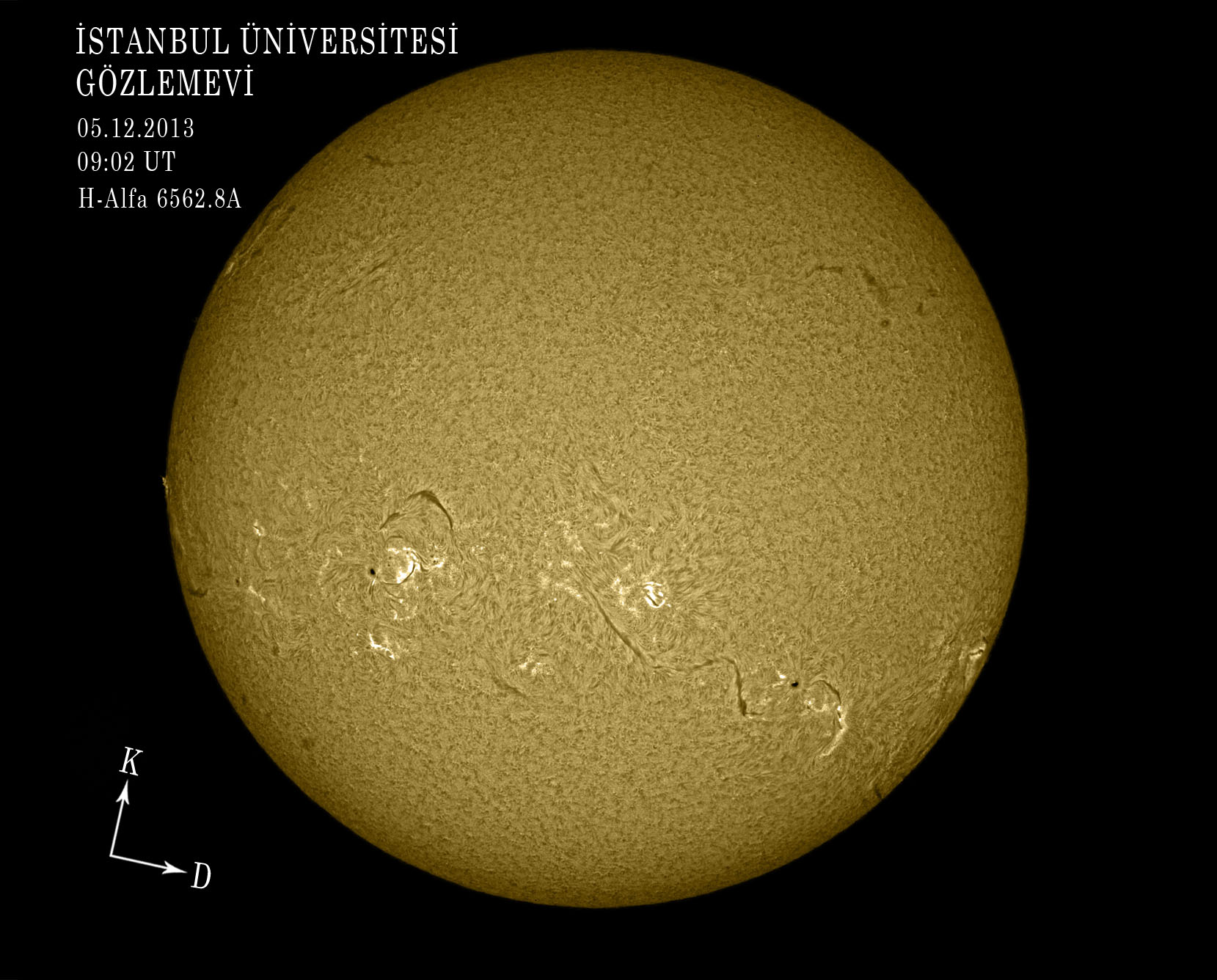 05.12.2013
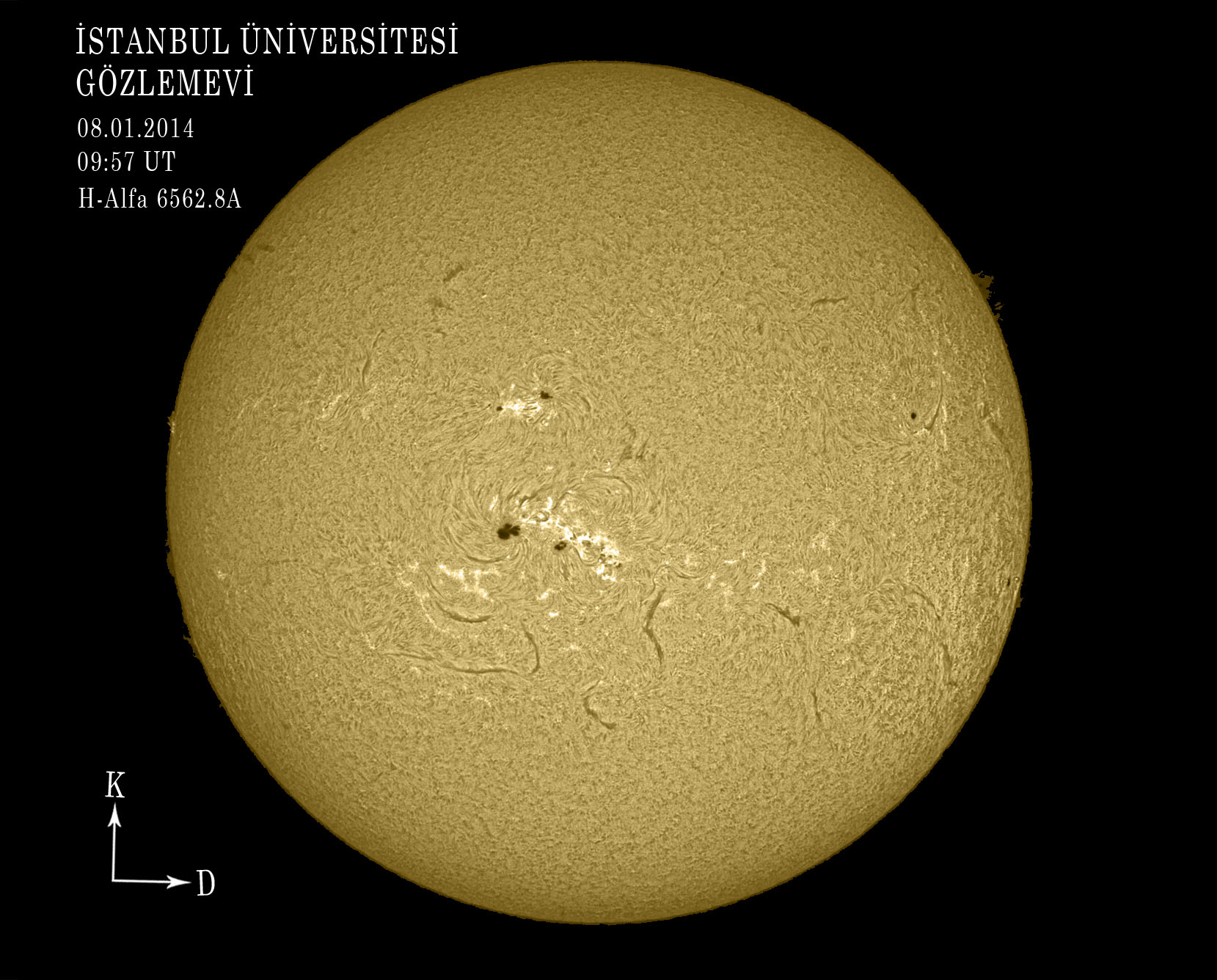 08.01.2014
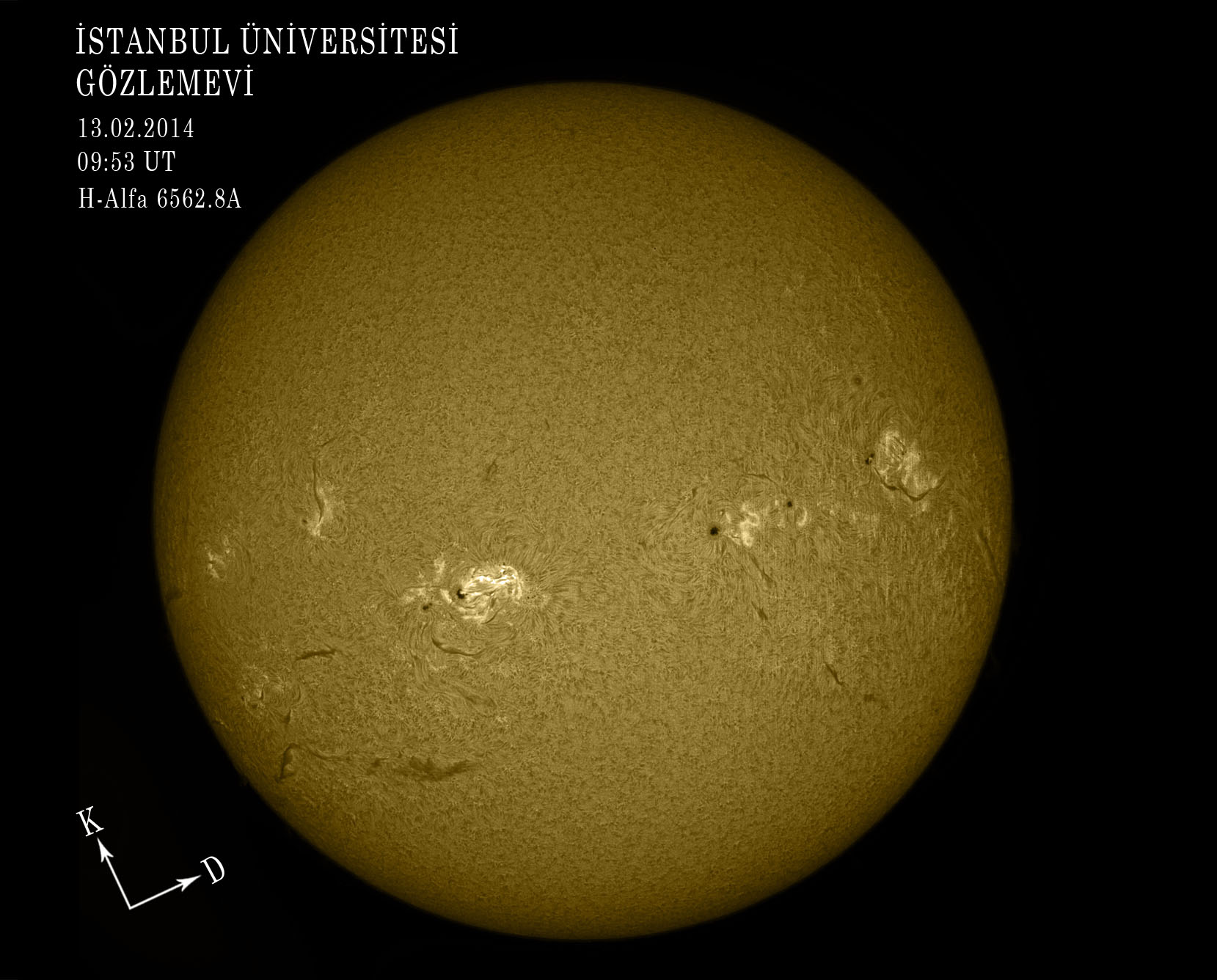 13.02.2014
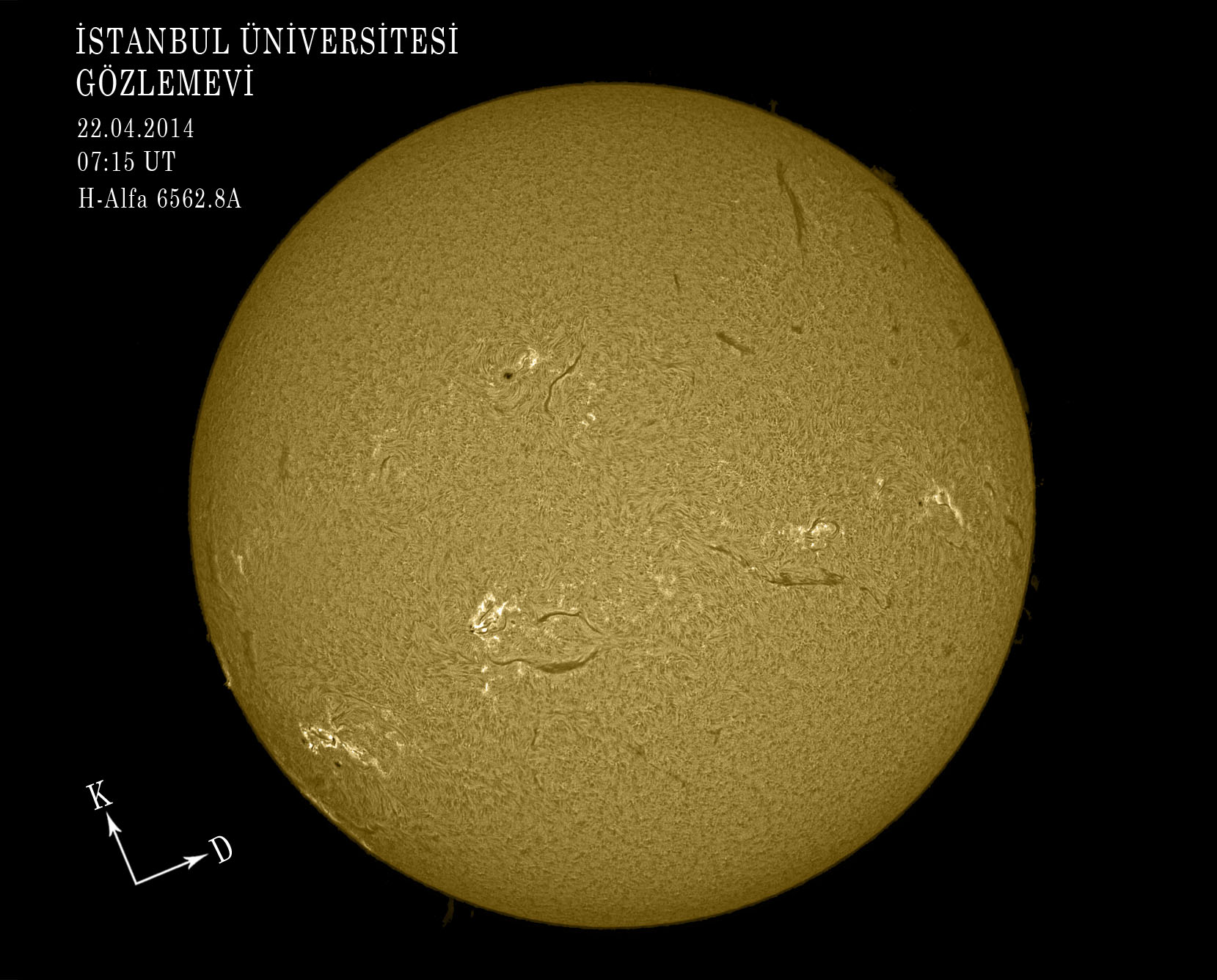 22.04.2014
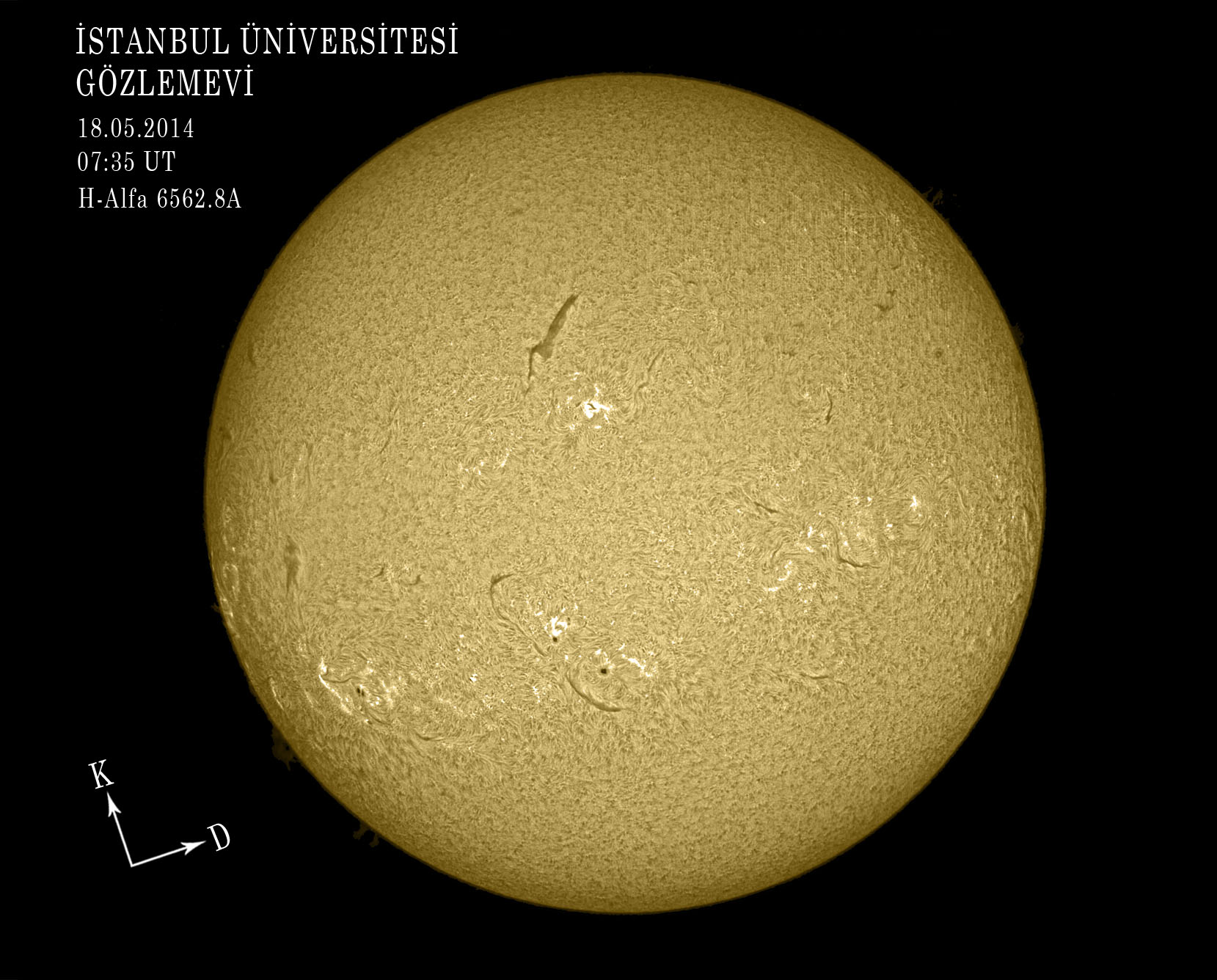 18.05.2014
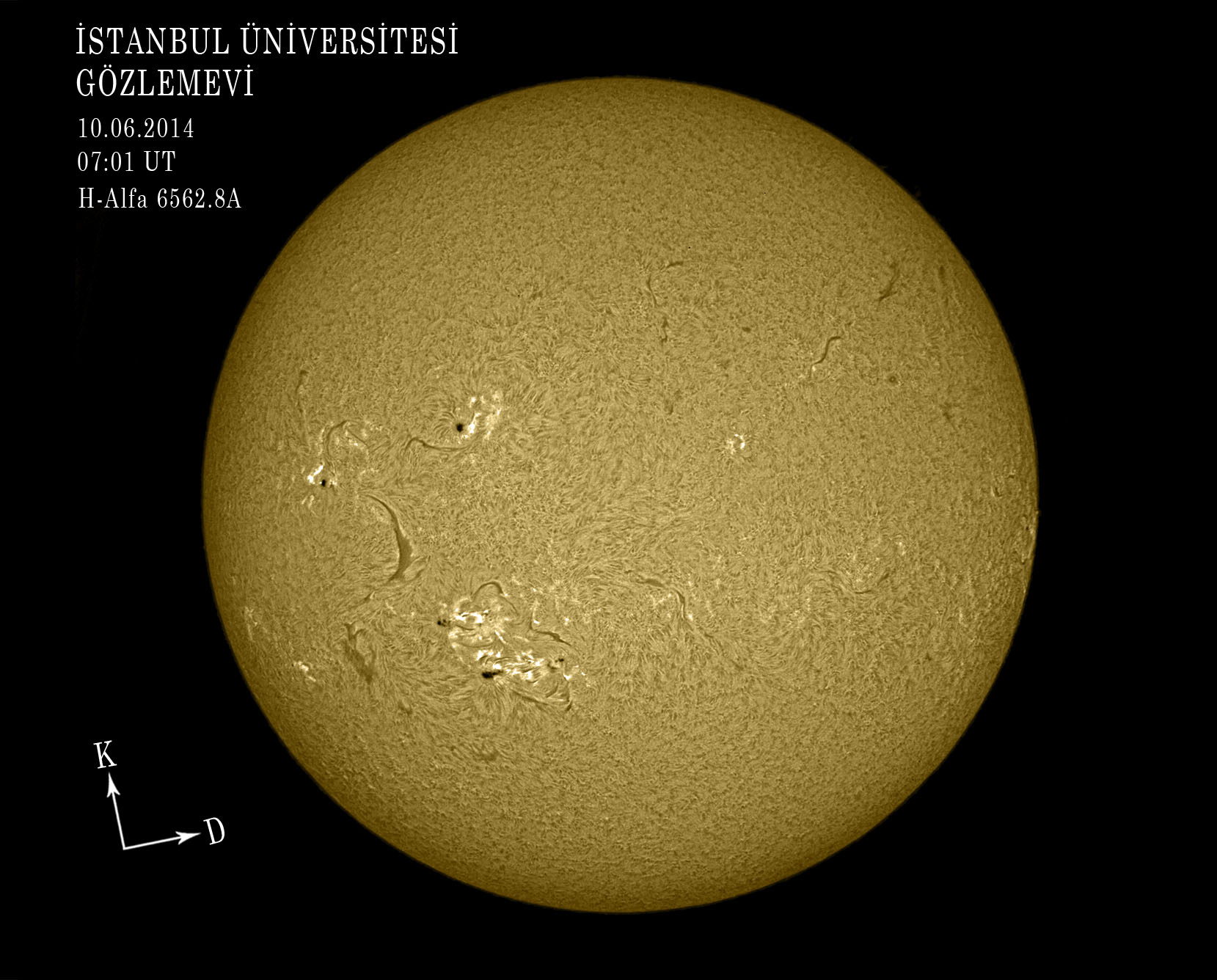 10.06.2014
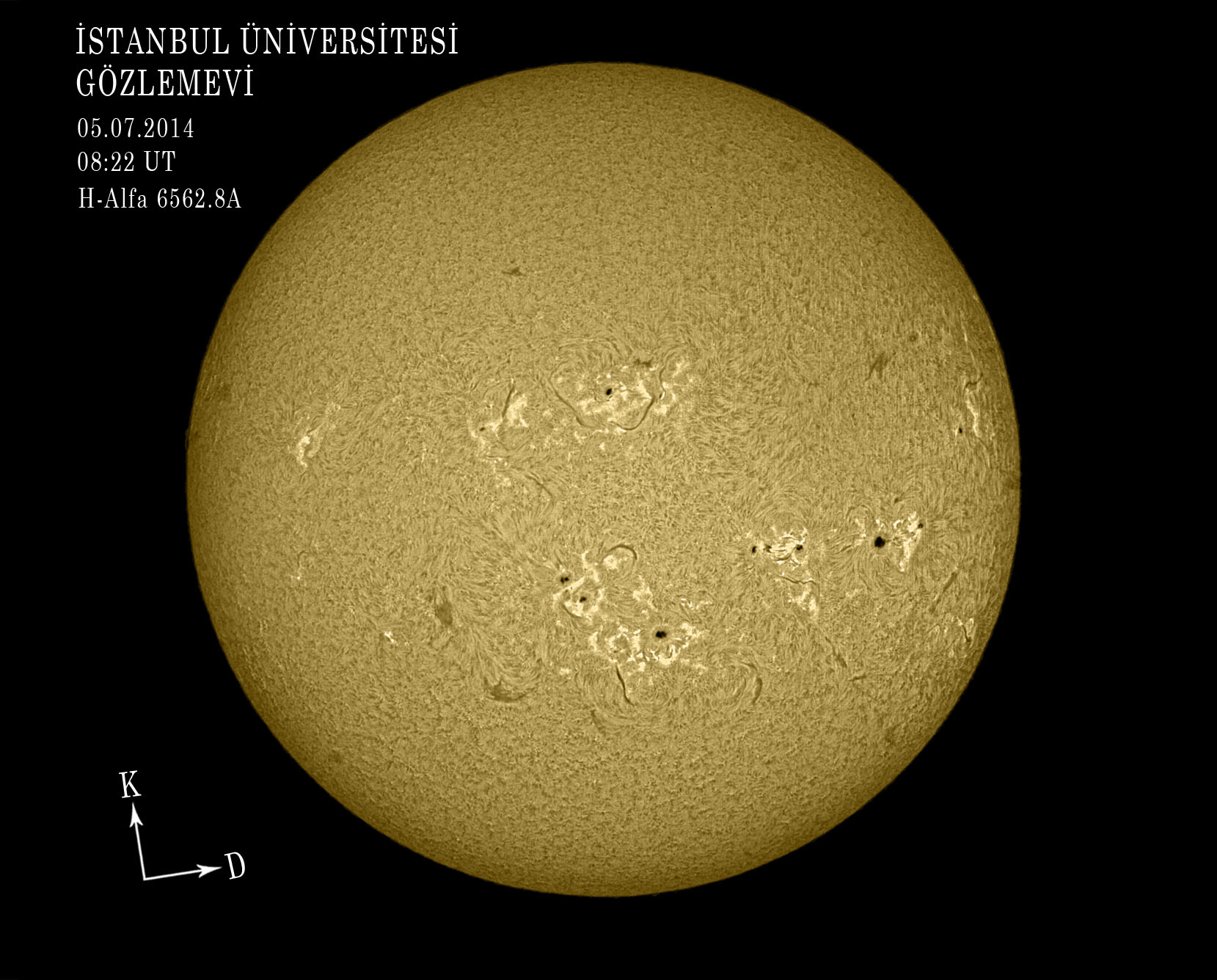 05.07.2014
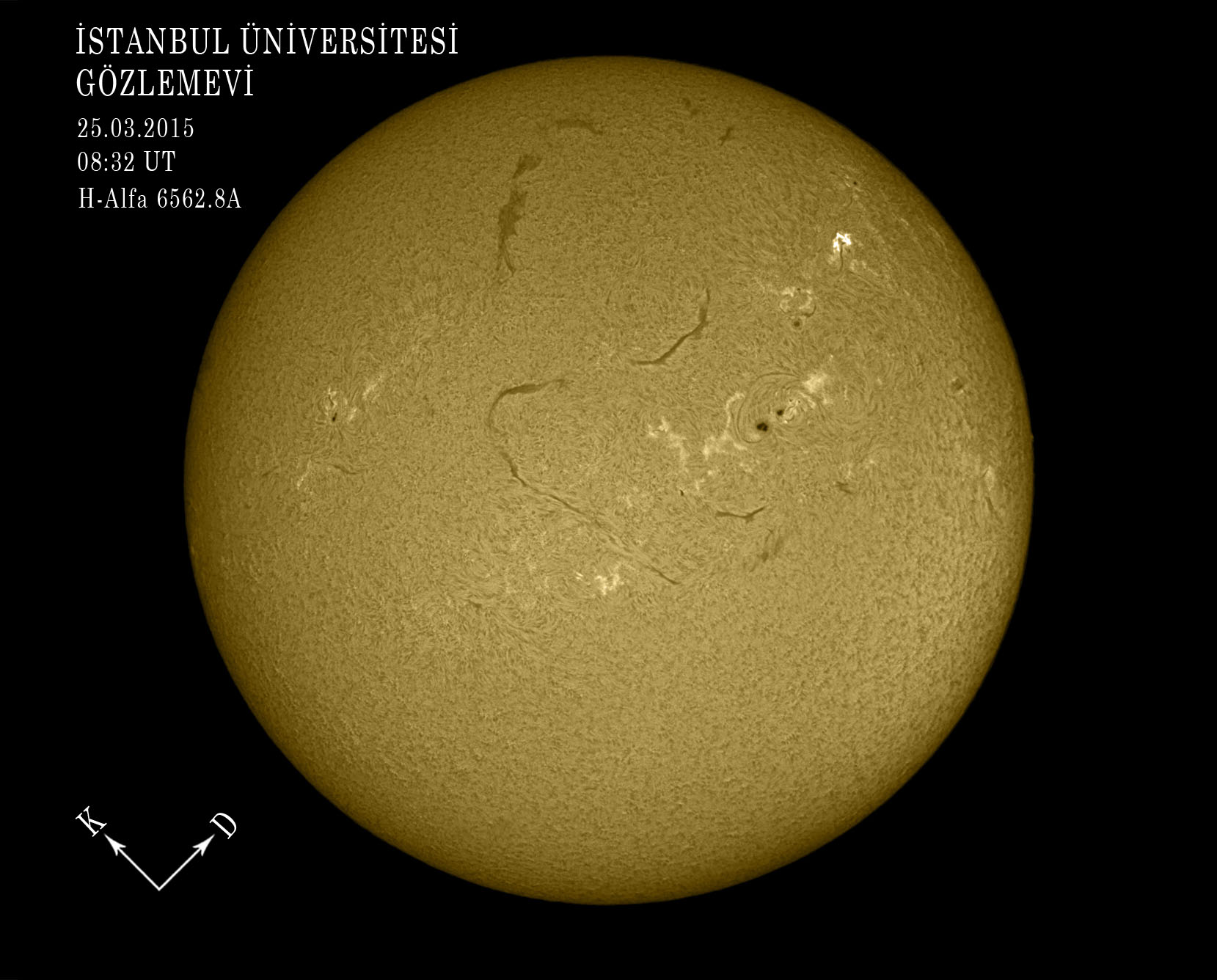 25.03.2015
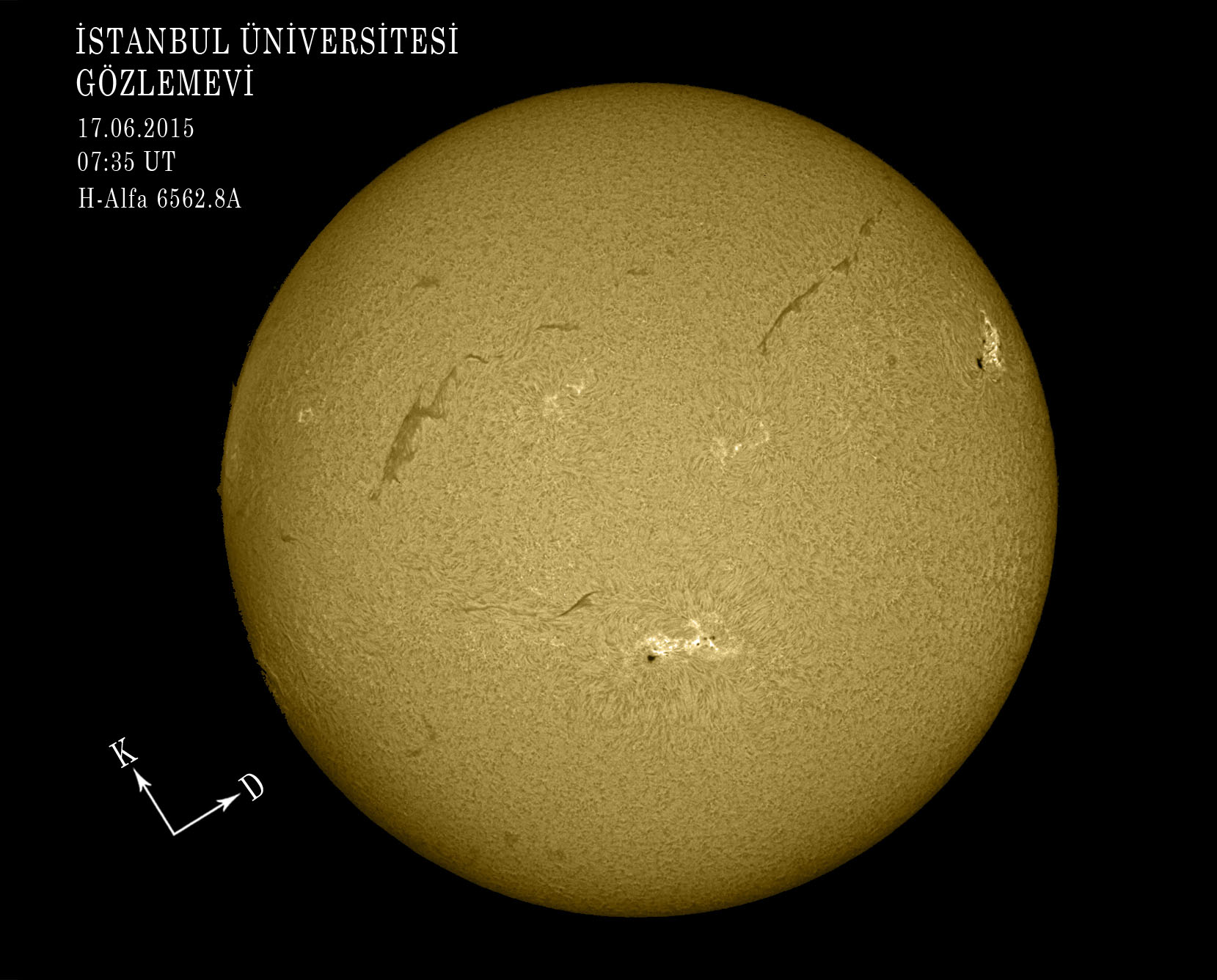 17.06.2015
Using the data
All observations can be downloaded through the JSON / CSV data service. If you use Istanbul University Observatory sunspot data in your research, the following acknowledgement would be appreciated: “This research has made use of Istanbul University Observatory Sunspot Observations.”